
© Castles & Palaces
Berkeley Castle
Berkeley Castle
England · Gloucestershire · Near Bristol
Built 1067 · Norman motte-and-bailey (1067); rebuilt in local blue lias limestone from 1150 under the Berkeley family; the medieval great hall (1340s) and keep survive in near-original condition; continuously occupied by the Berkeley family since 1154 — one of the longest continuous family tenancies of any English castle
Quick Facts
- Hours
- Open April to October, but not every day of the week — opening days vary seasonally and the castle remains a private family home, so check the official calendar before travelling.
- Entry from
- €18
- Duration
- Valid 1 day (full castle, dungeon, gardens)
- Best time
- April to October
- Nearest city
- Bristol
Highlights
- ✦Owned continuously by the Berkeley family since 1154 — one of the longest unbroken family tenancies of any castle in England
- ✦The site of Edward II's death in September 1327, after his deposition — the first official deposition of an English king and a death still debated by historians
- ✦A Great Hall built around 1340, stone-vaulted with a massive oak roof, among the finest surviving medieval great halls in England
- ✦An 8-metre dungeon oubliette pit, the medieval kitchen and a 12th-century chapel foundation, all largely unaltered by later restoration
- ✦Adjacent to The Chantry, birthplace and home of Edward Jenner, who developed the smallpox vaccine in 1796
Skip the queue with a guided tour
Skip-the-line tickets & expert guides
Berkeley Castle has been owned by the Berkeley family since 1154 — nearly 900 years of continuous family possession in a country where most castles have changed hands dozens of times. The family's longevity is remarkable, but it is not the most historically striking fact about Berkeley. That distinction belongs to September 1327, when a deposed king died in Berkeley's dungeon under circumstances that have been debated for seven centuries. Edward II, the only English king officially deposed before the 20th century, was brought to Berkeley Castle as a prisoner and never left.
Edward II was arguably the most catastrophically unsuccessful king in English history. Militarily defeated by the Scots at Bannockburn in 1314, surrounded by favourites who alienated his barons, deserted by his wife Isabella and her lover Roger Mortimer, he was deposed by parliament in January 1327 — the first such act in English history. He was imprisoned first at Kenilworth, then transferred to Berkeley Castle in April 1327 under the custody of Thomas de Berkeley and John Maltravers. In September, the official announcement was that he had died of a sudden illness; medieval chroniclers suggested a more violent end. The room where he was held, the Edward II cell in the inner keep, is shown to visitors today. Whether Edward was murdered here, escaped and died elsewhere, or died naturally remains debated by historians, and the uncertainty makes Berkeley Castle one of the most historically charged spaces in England.
The Berkeley family received the castle from Henry II in 1154, part of the general redistribution of Norman baronial power following the civil war of Stephen's reign. Every subsequent generation of Berkeleys has lived here — the family's history is, in effect, the castle's history. Robert Fitzharding, Maurice Berkeley, Thomas Berkeley (Edward II's jailer), John Smyth of Nibley, who wrote the first English county history from Berkeley's own archives — the family produced warriors, lawyers, administrators and eccentrics in roughly equal measure across the centuries. The current family, the eighteenth generation, still lives in a wing of the castle today.
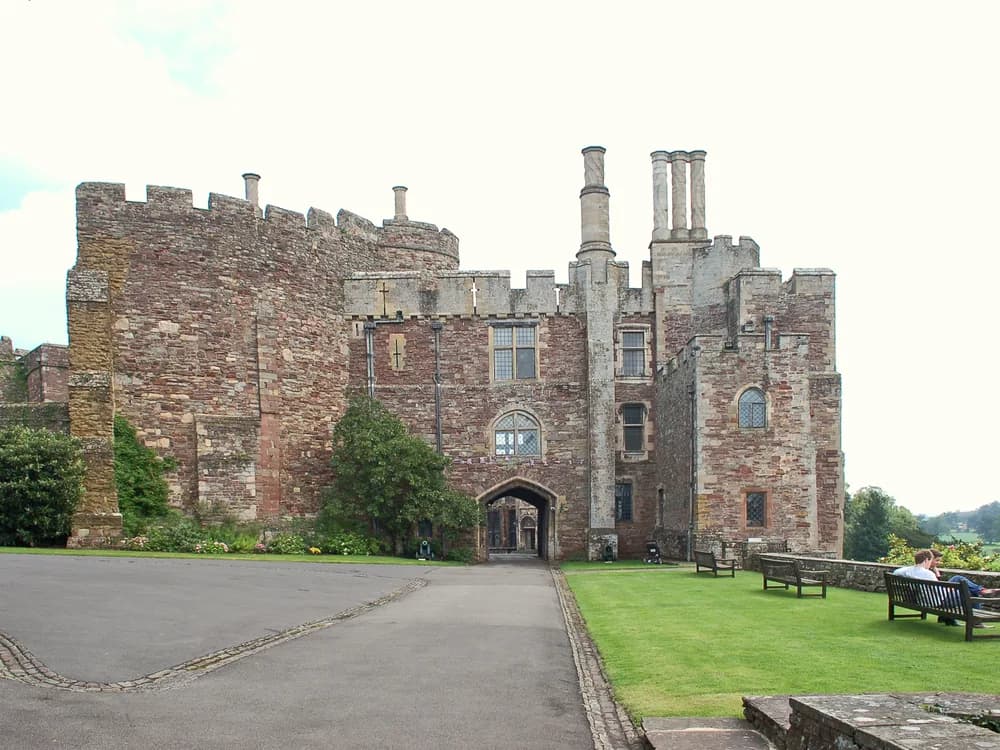
The core of Berkeley Castle — the keep, the Great Hall, the inner ward — survives from the 12th and 14th centuries in extraordinary condition. The Great Hall, built around 1340, is one of the finest surviving medieval great halls in England: stone-vaulted, with a massive oak roof and a late medieval wooden screen. The kitchen, dating to the 14th century, the chapel with its 12th-century foundation, and the dungeon with its 8-metre oubliette pit are all accessible and largely unaltered. Unlike many English castles where Victorian restoration has obscured the medieval fabric, Berkeley preserves a remarkable quantity of genuine 13th- and 14th-century material — partly because the family never needed to rebuild, and partly because, at various points in their long history, they couldn't always afford to.
Edward Jenner, who developed the smallpox vaccine in 1796, one of the most significant medical discoveries in human history, was born in Berkeley village in 1749. The Chantry, Jenner's house in Berkeley, sits adjacent to the castle grounds and is managed as a museum. The connection between the village, the castle and one of the founding moments of modern medicine runs through a Berkeley visit as an unexpected thread: medieval dungeon to vaccination pioneer, all within a five-minute walk.
The garden at Berkeley is an old-fashioned English garden in the best sense: plantsmanlike, idiosyncratic and unmistakably the product of accumulated generations of horticultural interest. The fern garden, established in the Victorian era, contains 28 species of fern growing in the moist shade of the castle walls. The rose garden, the herbaceous borders and the bowling green are all maintained by the family and included in the standard admission.
History
The first castle at Berkeley was a Norman motte-and-bailey raised in 1067, shortly after the Conquest. Henry II granted the site to the Berkeley family in 1154 as part of the wider redistribution of baronial power following the civil war of King Stephen's reign, and the family rebuilt the castle in local blue lias limestone from around 1150 onward, gradually replacing the earthwork structure with stone fortifications including the surviving keep.
The castle's most consequential historical episode came in 1327, when the deposed King Edward II was transferred here as a prisoner under the custody of Thomas de Berkeley, and died within the castle that September under circumstances that remain disputed to this day. The Great Hall was built around 1340, and the castle's medieval fabric — keep, hall, chapel foundation, kitchen and dungeon — has survived with unusually little later alteration. The Berkeley family has occupied the castle continuously since 1154, an unbroken tenure of nearly nine centuries that makes it one of the longest-held private castles in England, with the current generation still living in part of the building today.
How to Visit
Getting there: Berkeley is 23km south of Gloucester and 26km north of Bristol, both about 30 minutes by car. There is no direct public transport to the castle; Cam & Dursley railway station is 8km away, followed by a taxi.
Opening days: The castle is open April to October, but not every day of the week — specific opening days vary seasonally, so check the official website before travelling.
Tickets: GYG tour t617533 (4.9★ from 4 reviews) is the standard admission ticket covering the castle, dungeon and gardens.
Frequently Asked Questions
Edward II, deposed by parliament in January 1327, was transferred to Berkeley Castle in April 1327 under the custody of Thomas de Berkeley and died there that September. The official account at the time was that he died of a sudden illness, but medieval chroniclers suggested a more violent end, and historians have debated the true circumstances of his death for nearly seven centuries. The cell where he was reportedly held is shown to visitors as part of the castle tour.
Location
Berkeley, GL13 9BQ, United Kingdom
Nearby Castles
Featured Tour
Berkeley Castle: Admission Ticket
Cancellation available · Instant confirmation
Tours & Tickets
Powered by GetYourGuide
Entry from
€18/ adult