
© Unsplash
Château d'Azay-le-Rideau
Château d'Azay-le-Rideau
France · Loire Valley · Near Tours
Built 1518 · Renaissance
Quick Facts
- Hours
- April–June & September: daily 10:00–18:00. July–August: daily 09:30–19:00. October–March: daily 10:00–17:15. Gardens open 30 minutes before the château. Son et lumière runs select evenings May–September.
- Entry via GYG
- €15
- Duration
- 1–1.5 hours
- Best time
- May to October; the son et lumière show in summer evenings is unmissable
- Nearest city
- Tours
Highlights
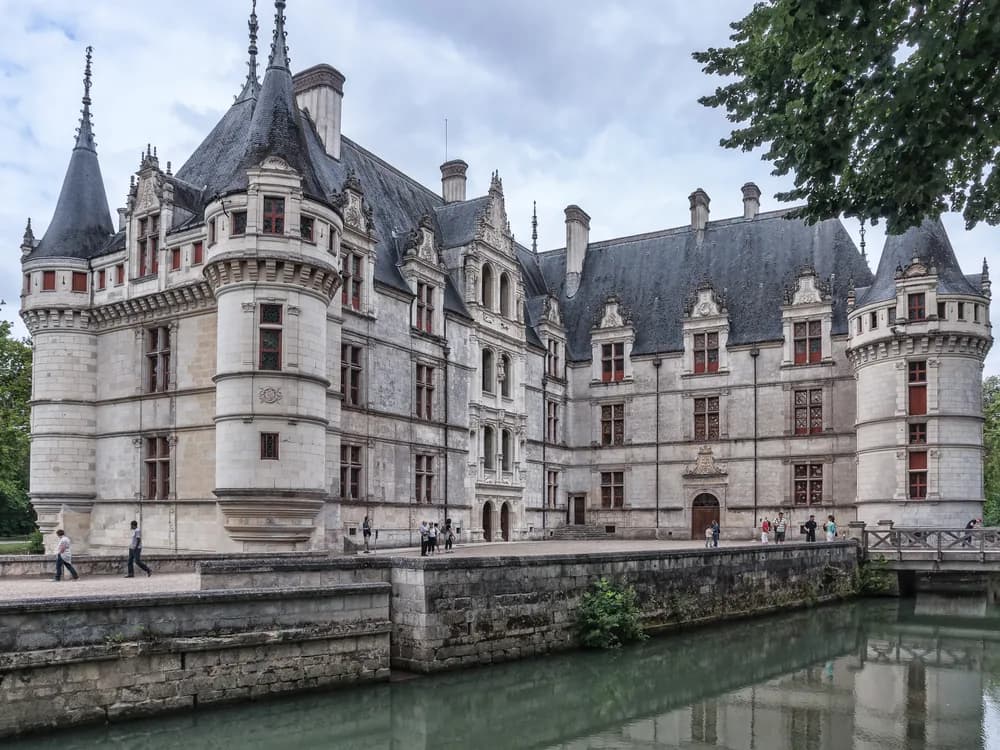
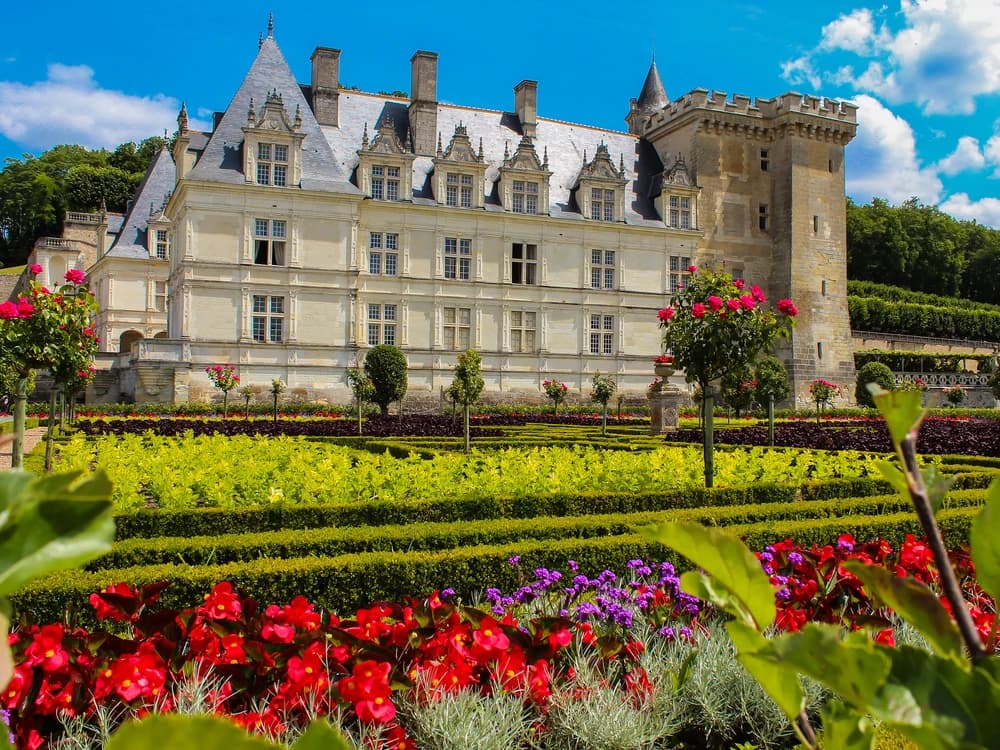
- ✦The reflected facade — Azay-le-Rideau is built on a small island in the Indre, its waterways deliberately shaped to mirror the entire north facade, making it the most-photographed exterior in the Loire Valley
- ✦The open loggia staircase — built by Gilles Berthelot's architect as the first staircase in French architecture opened to the facade as a series of loggias rather than enclosed in a tower, an innovation that influenced every Loire château built after 1520
- ✦The unfinished completeness — Gilles Berthelot fled France in 1527 leaving only one of four planned wings built, an accident of history that gives the château clear sight lines and daylight from three sides now considered part of its visual logic
- ✦The Indre river grounds — a path circling the island past 19th-century English-style landscaping, with dawn walks around the moat offering the finest free photographs in the Loire Valley
- ✦The son et lumière — a narrated light show projected on the façade every summer evening from May to September, combining the water reflection with projected light after dark
Skip the queue with a guided tour
Skip-the-line tickets & expert guides
Azay-le-Rideau is neither monumental nor theatrical — it is intimate, precise, and perfect in its proportions. Chambord overwhelms with scale; Chenonceau astonishes by spanning a river. Azay-le-Rideau simply persuades, the way a very beautiful, very well-proportioned building persuades: walk around the island and you keep looking back. The reflection in the surrounding water doubles an already exact facade. The building has a quality neither of its more famous neighbours quite possesses — it looks exactly as a Renaissance château should look, no more and no less, and that precision is its distinction.
Gilles Berthelot, François I's superintendent of finance and effectively the most powerful financial official in France, began building the château in 1518 on land his wife Philippa Lesbahy had inherited, apparently in deliberate architectural dialogue with the king's own Chambord, then under construction 60km to the east. When François I arrested Berthelot's patron Cardinal Briçonnet in 1527, Berthelot fled rather than risk the same fate, and the king confiscated the unfinished château, passing it as a gift through a succession of courtiers. That status as a royal gift rather than a private family seat likely spared Azay-le-Rideau from the disfiguring alterations that befell many other Loire châteaux over the following centuries.
The decisive architectural break at Azay-le-Rideau is the staircase. The French Renaissance was fundamentally about absorbing Italian architectural ideas into French building tradition, château by château along the Loire. Earlier French châteaux enclosed their stairs in towers projecting from the main body of the building. At Azay, the staircase is embedded directly in the facade, its landings opening through loggias to the exterior, light entering from outside, the stairs themselves visible from the courtyard. This was an Italian idea, reworked in French stone, and after Azay the enclosed stair-tower effectively disappeared from French domestic architecture.
The château passed through later owners including Prince Frederick of Hesse before the French state purchased it in 1905 and classified it a monument historique. It is now managed by the Centre des monuments nationaux, the same body that operates Mont-Saint-Michel and the Sainte-Chapelle, and its interiors were restored through the 1980s and 1990s to display a modest, well-curated collection of 16th- and 17th-century furniture. It joined the Loire Valley's UNESCO World Heritage inscription in 2000.
History
The original settlement here, then called Azay-le-Brûlé ('burned Azay'), takes its grim name from 1418, when the Dauphin — the future Charles VII — had the garrison massacred after they insulted his soldiers. The 'le-Rideau' name arrived separately, from a 15th-century captain named Rideau who held the site; the 'burned Azay' name was gradually dropped as the memory faded. Gilles Berthelot and his wife Philippa Lesbahy began the present château in 1518, incorporating the latest Italian Renaissance ideas reaching the French court. Berthelot fled to the Holy Roman Empire in 1527 after his patron Cardinal Briçonnet's execution for treason, and François I confiscated the unfinished building, passing it through a series of royal favourites over the following two centuries.
In the 19th century, the Biencourt family added the château's English-style landscaped park, softening the formal French symmetry of the building with picturesque planting. The château narrowly avoided demolition through its classification as a monument historique in 1840 by the newly formed Commission des monuments historiques — one of the first buildings in France to receive such protection — though its interior continued to decay until the French state purchased the property outright in 1905.
A sustained state restoration programme through the 1980s and 1990s returned the interiors to public display, and the château is now managed by the Centre des monuments nationaux. It was inscribed as part of the Loire Valley UNESCO World Heritage Site in 2000. The son et lumière programme, launched in 1975, is considered one of the finest in France, and the château is now most commonly visited as part of a half-day circuit paired with Villandry, 15km to the north.
How to Visit
Getting there: Azay-le-Rideau is 26km southwest of Tours, about 30 minutes by car via the D751. A train runs from Tours to Azay-le-Rideau station in roughly 30 minutes, though service is infrequent — check timetables in advance. The Loire à Vélo cycle route passes within 5km. Most visitors arrive by car or on organised day tours from Tours, Amboise or Paris, typically combined with Villandry in a half-day circuit.
Tickets and timing: Adult entry is €14, free for under-18s. GYG entry tickets (t75032) offer fast-track access. The château opens at 10:00 daily (earlier in peak season) — arrive at opening to catch the water reflection in flat morning light. The gardens open 30 minutes before the château itself. The son et lumière runs May to September; check the official website for exact dates and times.
What to focus on: Spend 20 minutes circling the island before entering, to take in the exterior and its reflection from multiple angles. Spend 10 minutes at the staircase understanding its structural logic — the loggias, the light, its relationship to the courtyard. The first-floor rooms hold coffered ceilings and period furniture, and the upper windows give views back down to the water. The full visit takes 60–90 minutes; leave time to walk the perimeter path at different angles, since the light changes the building's character throughout the day.
Frequently Asked Questions
Chambord is the Loire Valley's most monumental and theatrical château, built to overwhelm with scale. Chenonceau is famous for spanning the Cher river on a bridge. Azay-le-Rideau is smaller and quieter than either — its appeal comes from precise proportion and the reflection of its facade in the Indre river, rather than from grandeur or architectural drama. Many visitors and architectural historians consider it the most graceful single building in the Loire Valley, even though it draws fewer visitors than its larger neighbours.
Location
Rue de Pineau, 37190 Azay-le-Rideau, France
Nearby Castles
Featured Tour
Château of Azay-le-Rideau Entry Ticket
Cancellation available · Instant confirmation
Tours & Tickets
Powered by GetYourGuide
Entry from
€14/ adult