
© Castles & Palaces
Château de Meung-sur-Loire
Château de Meung-sur-Loire
France · Loire Valley · Near Orléans
Built 1209 · Medieval episcopal fortress with an 18th-century classical wing added by Cardinal Languet de Gergy; underground dungeon network carved into the rock
Quick Facts
- Hours
- Closed Mondays and in January. Reduced winter hours; check the official site for exact seasonal times.
- Entry via GYG
- €11.5
- Duration
- 1.5–2 hours
- Best time
- April to October
- Nearest city
- Orléans
Highlights
- ✦An underground dungeon network carved directly into the rock beneath the castle, used by the Bishops of Orléans to imprison and try their own subjects
- ✦The poet François Villon was imprisoned here in 1461, condemned to death, and saved only by the passing amnesty of a new king
- ✦An elegant 18th-century classical wing added by Cardinal Languet de Gergy, contrasting sharply with the medieval fortress beneath it
- ✦A real historical link to Alexandre Dumas's The Three Musketeers — Meung-sur-Loire is where d'Artagnan's fictional adventure begins
- ✦Eight centuries of continuous role as the secular power base of the Bishops of Orléans, who held their own courts and prisons independent of the French crown
Skip the queue with a guided tour
Skip-the-line tickets & expert guides
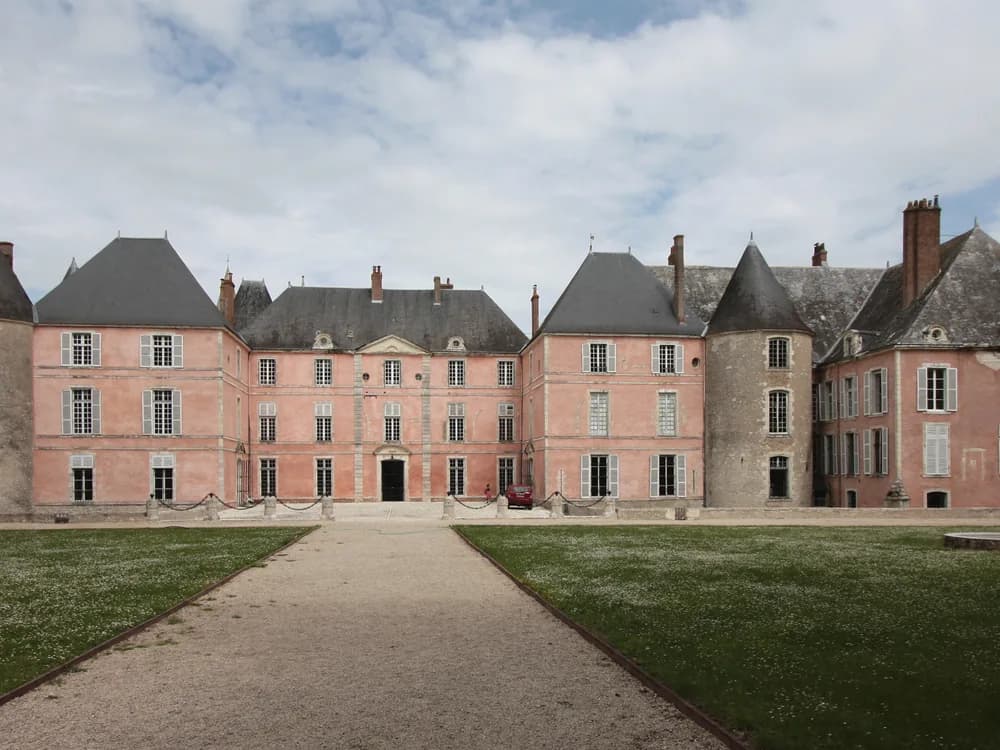
Meung-sur-Loire, a small town on the Loire roughly fifteen kilometres west of Orléans, holds a castle with a split personality: a forbidding medieval fortress at ground level and below, and an airy 18th-century episcopal residence layered on top. The combination makes Château de Meung-sur-Loire one of the more unusual visits in the Loire Valley, less famous than Chambord or Chenonceau but with a darker and in some ways more historically textured story.
The castle was built from 1209 by the Bishops of Orléans, who held Meung-sur-Loire as a secular fief entirely independent of the French crown — an unusual arrangement that gave the bishops their own judicial authority, their own courts, and crucially their own prisons. The underground levels of the castle, carved into the natural rock, formed a genuine network of cells and interrogation chambers where the bishops tried and imprisoned their subjects for eight centuries. Walking through these vaulted underground spaces today, with their oubliettes and narrow stone stairs, gives a far more visceral sense of medieval justice than any museum display.
The castle's most famous prisoner was the poet François Villon, the great voice of 15th-century French vernacular poetry, who was imprisoned at Meung in the summer of 1461 on charges that remain disputed by historians — theft, brawling, or simply the wrong associations. Villon was condemned to death, and his fate hung on the accession of a new king, Louis XI, whose customary amnesty for prisoners on his accession to the throne happened to fall at exactly the right moment to spare Villon's life. Villon left a furious, sardonic account of his imprisonment at Meung in his poetry, cursing the bishop responsible by name. The episode is one of the best-documented brushes between French literature and a specific, identifiable medieval prison.
In the 18th century, Cardinal Jean-Baptiste-Joseph Languet de Gergy, Bishop of Soissons and a significant patron of the arts, added an elegant classical wing to the medieval core, with tall windows, a graceful façade and refined interior decoration entirely unlike the grim fortress beneath. The contrast between the two halves of the building, medieval dungeon below, Enlightenment salon above, is the castle's most distinctive architectural feature and is presented as such on the visitor route, which typically moves from the airy upper rooms down into the cold stone vaults.
Meung-sur-Loire has one further claim on visitors' attention: it is the town where Alexandre Dumas opens The Three Musketeers, with d'Artagnan's fateful tavern brawl that sets the entire novel in motion. Although Dumas's scene is fictional, the genuine historical weight of the town, an independent episcopal fiefdom with its own castle, courts and prisons for eight centuries, gave Dumas a setting with real documentary substance to build on, and the town today embraces the connection with light-touch commemorative signage near the old town centre.
History
The Bishops of Orléans began construction of the castle at Meung-sur-Loire in 1209, establishing it as the secular seat of their independent fiefdom, separate from royal authority, with its own judicial courts and prison network carved into the underlying rock. For roughly eight centuries, the bishops exercised direct temporal power over the town and its surroundings from this castle, trying and imprisoning subjects in the underground cells that survive largely intact today.
The castle's most documented historical episode came in 1461, when the poet François Villon was imprisoned in its dungeons, condemned to death, and ultimately saved by the general amnesty granted by Louis XI upon his accession to the French throne. In the 18th century, Cardinal Languet de Gergy added a refined classical wing to the medieval fortress, reflecting the more comfortable, secular tastes of Enlightenment-era episcopal administration. The castle's combination of medieval prison and 18th-century residence has been preserved and is now open to visitors as a single historic site illustrating both halves of its long institutional history.
How to Visit
Getting there: Meung-sur-Loire is about 15km west of Orléans. Regular trains run from Orléans to Meung-sur-Loire station (15 minutes), and the castle is a short walk from the station through the old town. By car, it is roughly 20 minutes from Orléans via the D951.
Tickets: GYG tour t1284742 covers castle entry. With 2 reviews at a 5.0 rating, the listing is new but already shows a star rating on the site, since the site's display threshold requires more than one review.
Combine with: Orléans itself, with its Joan of Arc history and cathedral, makes a natural pairing for a half-day or full-day visit combining the city and the castle.
Frequently Asked Questions
François Villon, one of the most important French poets of the 15th century, was imprisoned in the castle's dungeons in the summer of 1461 on charges that remain disputed among historians, variously linked to theft, brawling or troublesome associations. He was condemned to death, but a general amnesty granted by Louis XI on his accession to the French throne arrived in time to spare Villon's life. Villon later wrote bitterly about his imprisonment at Meung, directly naming the bishop he held responsible.
Location
10 Pl. du Martroi, 45130 Meung-sur-Loire, France
Nearby Castles
Featured Tour
Meung-sur-Loire: Château Entry Ticket
Cancellation available · Instant confirmation
Tours & Tickets
Powered by GetYourGuide
Entry from
€11.5/ adult