
© Castles & Palaces
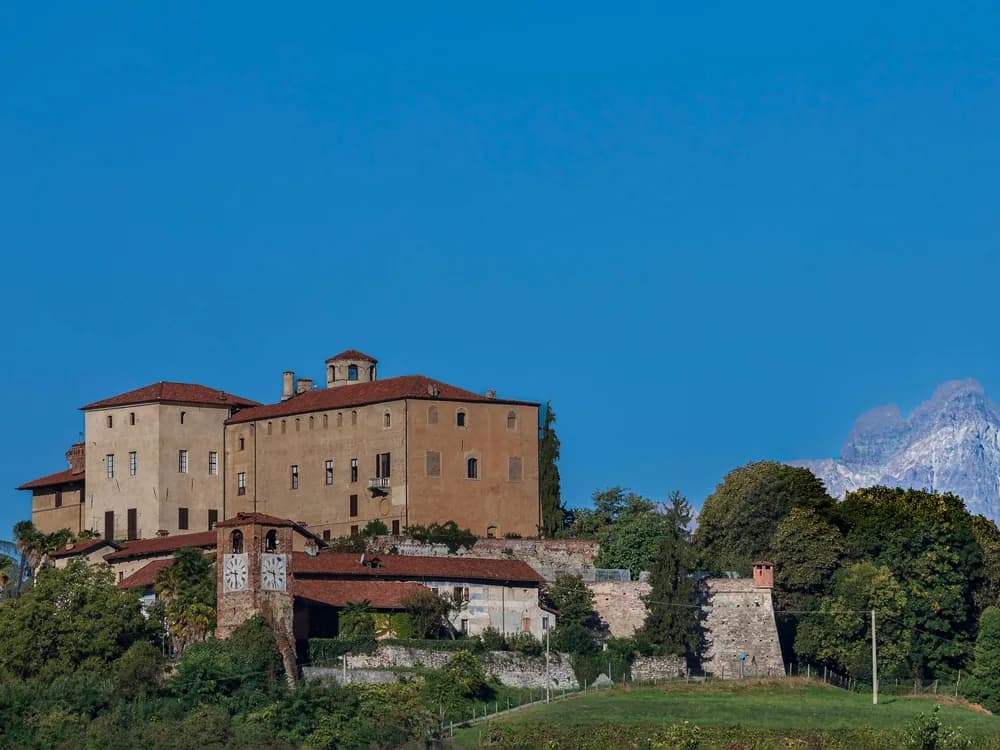
Castello di Manta
Castello della Manta
Italy · Piedmont · Near Cuneo
Built 1100 · Medieval Saluzzo marquisate castle; 12th-century defensive origin; principal artistic feature is the Baron's Hall with its cycle of secular Gothic frescoes (c. 1420) — the most significant medieval secular fresco cycle in Piedmont and one of the finest in Italy; FAI property since 1985
Quick Facts
- Hours
- Open Saturdays, Sundays and public holidays, March to November. Check the FAI calendar for occasional special weekday openings.
- Entry from
- €10
- Duration
- 1 hour
- Best time
- March to November (check FAI opening calendar)
- Nearest city
- Cuneo
Highlights
- ✦The Baron's Hall frescoes, painted around 1420, the most important surviving secular Gothic painting in Piedmont and among the finest in Italy
- ✦A cycle of the Nine Heroes and Nine Heroines, rendered with heraldic detail and individuated faces that suggest contemporary court portraiture
- ✦A complete Fountain of Youth cycle — one of the most fully preserved depictions of this medieval theme anywhere in European painting
- ✦Seat of the Marchesato di Saluzzo, a small but culturally French-influenced principality independent until 1601
- ✦An FAI-restored hilltop castle paired naturally with the well-preserved medieval town of Saluzzo, 5km away
Skip the queue with a guided tour
Skip-the-line tickets & expert guides
In the mountains above Cuneo, in the foothills where the Alps begin their serious ascent toward France, a small village called Manta contains one of the great hidden treasures of medieval art in Italy. The Castello della Manta was the seat of the Marchesato di Saluzzo, a small but sophisticated principality that occupied the southwestern corner of Piedmont from the 12th to the 16th century. In its Baron's Hall, around 1420, an unknown artist painted a fresco cycle of such quality and completeness that it represents the most important surviving secular Gothic painting in Piedmont. Most visitors to Italy never hear of it.
The Marchesato di Saluzzo was one of the last independent Italian principalities to fall to the Savoyard expansion, absorbed only in 1601, after the Treaty of Lyon. For four centuries it occupied a liminal position between France and Savoy, culturally French in its language and artistic connections, politically always in play between larger powers. The Manta castle was the principal seat of the Del Vasto family, Marchesi di Saluzzo, and the artistic culture of their court was closer to the French Duc de Berry than to any Italian contemporary.
The Baron's Hall at Manta contains two fresco cycles painted around 1420, almost certainly by a local artist working in the International Gothic style under direct French influence. The first cycle depicts the Nine Heroes and Nine Heroines, a standard medieval theme of nine ideal warrior-figures drawn from antiquity, the Old Testament and the medieval period, but executed here with extraordinary refinement: heraldic detail, contemporary court costume, rich colour, individuated faces that suggest portraiture. The second cycle depicts the Fountain of Youth: old and infirm figures entering the water on one side, emerging young and vigorous on the other, surrounded by courtly figures dancing, dressing and feasting. The Fountain of Youth cycle is one of the most complete surviving examples of this theme in European medieval painting.
International Gothic was the pan-European courtly style of the late 14th and early 15th centuries: the style of the Limbourg brothers' Très Riches Heures, of Gentile da Fabriano, of the court of the Dukes of Burgundy. It was characterised by sinuous line, jewel-like colour, elaborate pattern and a particular quality of decorative luxuriance. The Manta frescoes belong to this tradition and demonstrate that it penetrated even into the relatively remote valleys of southwestern Piedmont. They were painted within a decade of the Très Riches Heures and share its visual vocabulary.
The Fondo Ambiente Italiano acquired Manta in 1985 and undertook a major restoration of the frescoes, which had deteriorated significantly under previous owners. The restoration, completed over several years in the late 20th century, stabilised the surface and recovered much of the original colour. The frescoes are now properly lit and explained; the Baron's Hall is the sole reason most art historians visit Manta.
Beyond the Baron's Hall, the castle contains period-furnished rooms, a chapel and a loggia with views over the Po plain toward the Alps. The town of Saluzzo below is one of the best-preserved medieval-Renaissance towns in Piedmont, with a cathedral, a Gothic church, San Giovanni, and the Casa Cavassa with its own frescoed interior. A half-day combining the castle and the town is the recommended visit pattern.
History
The castle at Manta dates in origin to the 12th century, built to serve the defensive and administrative needs of the Marchesato di Saluzzo, a principality that maintained its independence in the southwestern corner of Piedmont until 1601, when it was finally absorbed by the House of Savoy following the Treaty of Lyon. The Del Vasto family, Marchesi di Saluzzo, made Manta one of their principal seats, and around 1420 commissioned an unknown artist to paint the fresco cycles in the Baron's Hall that remain the castle's defining feature, working in the International Gothic style fashionable at French and Burgundian courts of the period.
The castle's significance faded after the Marchesato's absorption into Savoy, and its frescoes deteriorated under successive owners over the following centuries. The Fondo Ambiente Italiano acquired the property in 1985 and undertook an extensive restoration of the Baron's Hall frescoes, stabilising the painted surface and recovering much of its original colour, work that has made Manta one of the most significant medieval art sites managed by the foundation.
How to Visit
Getting there: Manta is 5km from Saluzzo, about 10 minutes by car, and 30km from Cuneo, about 30 minutes by car. Cuneo is connected by train to Turin in about 1 hour 10 minutes.
Opening days: The castle is open Saturdays, Sundays and public holidays from March to November; check the FAI calendar for occasional weekday openings.
Tickets: GYG tour t433961 (4.6★, 28 reviews) is the official FAI admission ticket.
Combine with: The town of Saluzzo, 5km away, is one of the best-preserved medieval-Renaissance towns in Piedmont and pairs naturally with a castle visit for a half-day trip.
Frequently Asked Questions
The Baron's Hall contains two fresco cycles painted around 1420 by an unknown artist working in the International Gothic style: a depiction of the Nine Heroes and Nine Heroines, rendered with unusually refined heraldic and portrait-like detail, and a complete Fountain of Youth cycle showing figures transformed from old age to youth. Together they form the most significant surviving secular Gothic fresco cycle in Piedmont and one of the finest examples of this courtly painting style in Italy.
Location
Via al Castello 2, 12030 Manta CN, Italy
Nearby Castles
Featured Tour
Manta: Castello di Manta Entry Ticket
Cancellation available · Instant confirmation
Tours & Tickets
Powered by GetYourGuide
Entry from
€10/ adult