
© Castles & Palaces
Mogoșoaia Palace
Palatul Mogoșoaia
Romania · Ilfov County · Near Bucharest
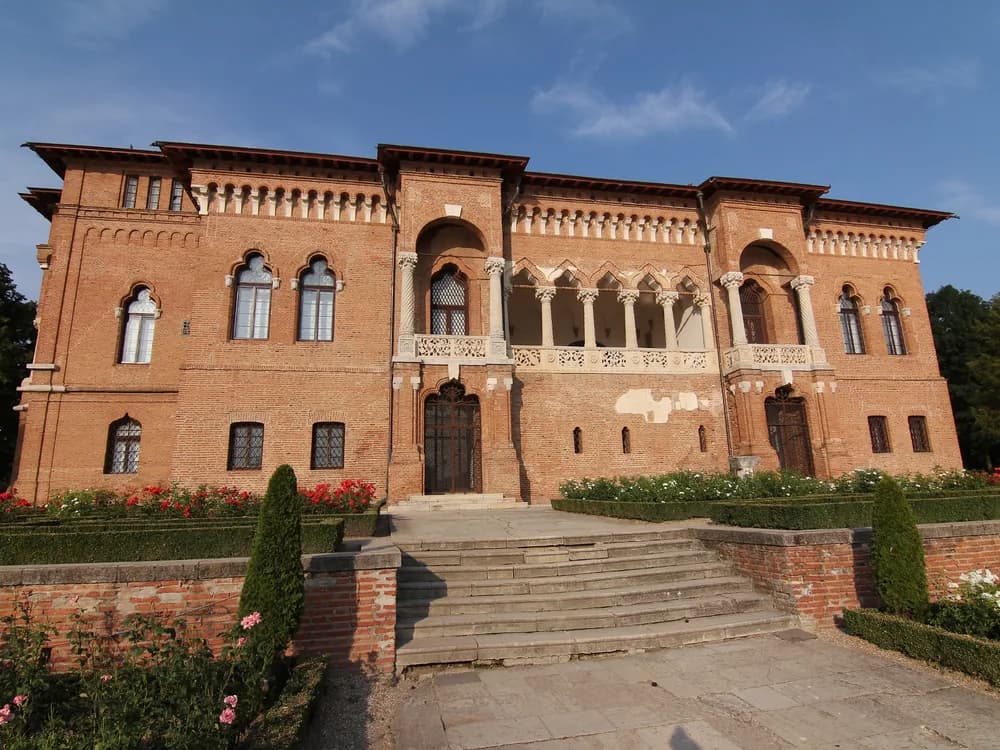
Built 1702 · Brâncovenesc style; built 1698–1702 by Prince Constantin Brâncoveanu; combines Byzantine arched loggias, Venetian Renaissance ornamental detail, and Ottoman spatial planning; the most complete surviving example of the Brâncovenesc style, the only distinctive architectural tradition native to the Wallachian Principality
Quick Facts
- Hours
- Closed Mondays. Hours may be reduced in winter — check the official site before visiting. The lakeside park remains freely accessible during daylight hours.
- Entry from
- €5
- Duration
- 1–2 hours (palace and grounds)
- Best time
- April to October (lakeside grounds particularly pleasant in spring and autumn)
- Nearest city
- Bucharest
Highlights
- ✦The most complete surviving example of the Brâncovenesc style, the only architectural tradition native to the Wallachian Principality
- ✦A signature loggia combining Byzantine arcading, Venetian Renaissance carved ornament, and Ottoman spatial planning, reflected in the lake below
- ✦Built by Prince Constantin Brâncoveanu, beheaded by the Ottomans in Constantinople in 1714 alongside his four sons after refusing to convert to Islam
- ✦Restored and revived in the 1920s by Princess Martha Bibescu, whose salon here drew Marcel Proust's circle, Paul Valéry and the Aga Khan
- ✦A 17km, 30-minute trip from central Bucharest, making it one of the most accessible princely residences near the capital
Skip the queue with a guided tour
Skip-the-line tickets & expert guides
Seventeen kilometres from the centre of Bucharest, on a wooded peninsula above a lake that once powered a mill, stands one of the most beautiful buildings in Romania, and one of the least known outside it. Mogoșoaia Palace is the finest surviving example of the Brâncovenesc style: a distinctly Wallachian architecture that synthesised Byzantine, Venetian and Ottoman elements into something unlike anything else in Europe. It was built at the turn of the 18th century by one of the most cultured princes Romania ever produced, and destroyed within thirteen years of its completion by the Ottomans who had him executed. Its subsequent history — abandoned, plundered, restored, turned into a salon that attracted Proust's circle — is as layered as the building itself.
Constantin Brâncoveanu ruled the Principality of Wallachia, roughly southern Romania, from 1688 to 1714, a reign of remarkable stability and cultural production. Wallachia in this period was a tributary of the Ottoman Empire, but Brâncoveanu navigated the competing pressures of Ottoman Constantinople, Habsburg Vienna and Petrine Russia with extraordinary skill, corresponding with all three powers simultaneously while maintaining his principality's autonomy. He used the resulting stability to build: monasteries, churches, palaces, and the estate at Mogoșoaia, which became his primary summer residence.
The loggia of Mogoșoaia Palace, a ground-floor arcade of slender columns topped by an upper-floor gallery of twisted Venetian columns supporting arched openings, is the signature element of Brâncovenesc architecture. The carved stone ornament combines acanthus leaves and vine scrolls from the Byzantine tradition with Venetian grotesque masks and rope mouldings from Renaissance Italy. The result is not eclectic in the pejorative sense but genuinely synthetic, a local architectural confidence reinterpreting multiple traditions into a new whole. The building faces east over the lake, its loggia reflected in the water, an arrangement that combines the functional coolness of shaded arcades with the visual pleasure of reflection.
In 1714, the Ottoman Sultan Ahmed III summoned Brâncoveanu to Constantinople, accused him of corresponding with Christian powers against the Porte, and had him imprisoned in the Seven Towers fortress. That August, Brâncoveanu, his four sons and his son-in-law were beheaded in Constantinople. Contemporary accounts state that each son was given the opportunity to save himself by converting to Islam, and that each refused, following their father's example; Brâncoveanu was executed last, having watched his sons die before him. He was canonised by the Romanian Orthodox Church in 1992. Mogoșoaia, confiscated by the Ottomans after his death, was largely stripped of its contents and fell into neglect.
The palace's second life began in 1912, when Princess Martha Bibescu, a Romanian aristocrat, French-language novelist and one of the great hostesses of early 20th-century Europe, inherited Mogoșoaia through her husband's family. She spent the next decade restoring the palace and establishing it as a cultural gathering point. Marcel Proust corresponded with Bibescu; Paul Valéry visited; the Aga Khan came; members of the French Academy arrived. The 'Belle de Mogoșoaia', as Bibescu was known, turned a Romanian princely residence into a salon connecting Bucharest to the European cultural world between the wars. Her memoir, The Green Parrot, describes the palace and its visitors in an account of remarkable literary quality.
After the Second World War, the Communist government of Romania confiscated Mogoșoaia from the Bibescu family. The palace was used as a museum and eventually fell into neglect again during the Ceaușescu era. After 1989, the property was eventually returned to the Bibescu heirs, who manage it today as a cultural foundation. The restoration work is ongoing, and some rooms are better maintained than others. The grounds — the lake, the park, the reconstructed garden terraces — are the strongest element of a current visit, and the palace rewards visitors who come for the architecture and the setting as much as for a polished museum experience.
History
Prince Constantin Brâncoveanu built Mogoșoaia Palace between 1698 and 1702 as his primary summer residence during a reign over Wallachia that lasted from 1688 to 1714 and was marked by unusual political stability and cultural patronage. In 1714, the Ottoman Sultan Ahmed III had Brâncoveanu arrested on suspicion of secretly negotiating with Christian powers, and that August he and his four sons were beheaded in Constantinople after refusing to convert to Islam. Mogoșoaia was confiscated by the Ottomans following his execution and fell into prolonged neglect.
The palace's revival began in 1912, when Princess Martha Bibescu inherited the estate through marriage and undertook an extensive restoration over the following decade, transforming Mogoșoaia into a celebrated cultural salon that drew figures including Marcel Proust's correspondents and Paul Valéry during the interwar period. The Communist government confiscated the property from the Bibescu family after the Second World War, operating it as a museum before it fell into further neglect under the Ceaușescu regime. Following the fall of communism in 1989, the palace was eventually returned to the Bibescu heirs, who continue to manage it today as a cultural foundation, with restoration work ongoing.
How to Visit
Getting there: Mogoșoaia is 17km north of Bucharest city centre, about 30 minutes by car or 50 minutes by suburban bus from Gara de Nord.
On site: The palace grounds are accessible on foot or by bicycle along the lake; the interior requires a ticket. GYG tour t1014906 is among the cheapest admission tickets in the site's inventory, reflecting Romania's generally low ticket pricing for state and foundation-managed cultural sites.
Note on the GYG rating: The available GYG tour for Mogoșoaia carries a rating of 3.4 stars from 10 reviews, the lowest of any tour in this site's inventory. This most likely reflects logistical friction — site signage or audio guide quality — rather than the heritage value of the palace itself, which remains historically and architecturally significant.
Combine with: A Bucharest city visit covering the old town, the Palace of the Parliament and the Village Museum. Spring (April–May) is the best season: the surrounding lime trees are in leaf, the lake is full, and the loggia's reflection is at its most dramatic.
Frequently Asked Questions
In 1714, the Ottoman Sultan Ahmed III accused Brâncoveanu of secretly corresponding with Christian powers — the Habsburgs and Russia — against Ottoman interests, despite Wallachia's status as an Ottoman tributary state. He was summoned to Constantinople, imprisoned, and beheaded that August along with his four sons and a son-in-law, after each son reportedly refused the offer to save himself by converting to Islam. He was canonised by the Romanian Orthodox Church in 1992, and Mogoșoaia Palace remains his most complete surviving architectural legacy.
Location
Str. Valea Parcului 1, Mogoșoaia 077135, Romania
Nearby Castles
Featured Tour
Bucharest: Mogoșoaia Palace Official Entry Ticket
Cancellation available · Instant confirmation
Tours & Tickets
Powered by GetYourGuide
Entry from
€5/ adult