
© Castles & Palaces
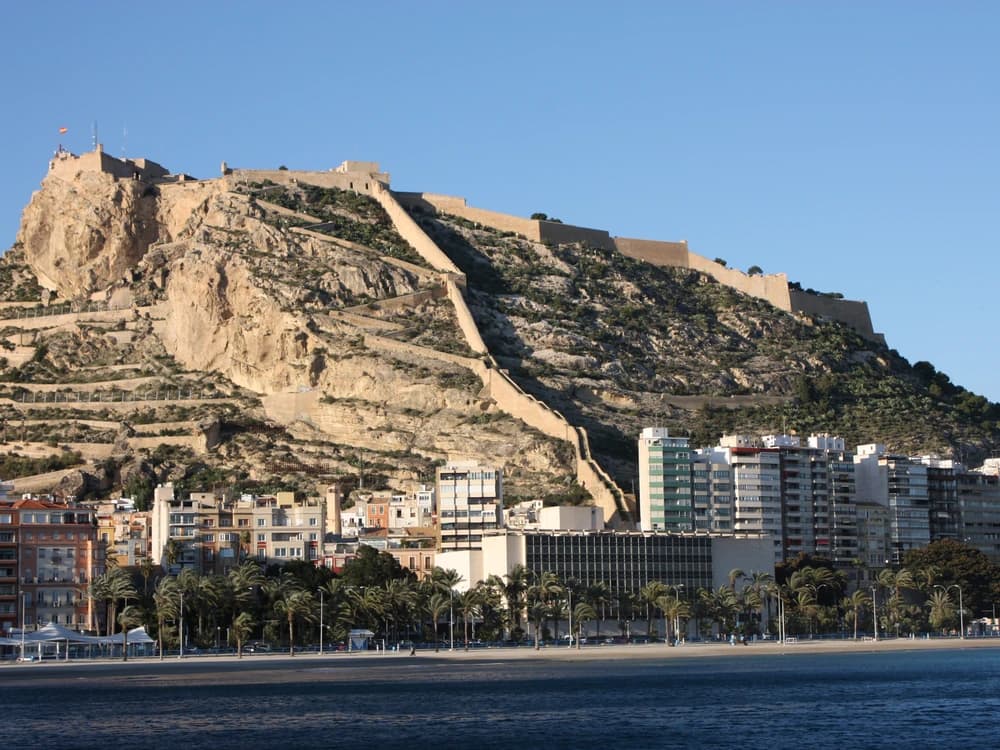
Santa Bárbara Castle
Castillo de Santa Bárbara
Spain · Alicante, Valencian Community · Near Alicante
Built 825 · Moorish origin, rebuilt in Renaissance military style
Quick Facts
- Hours
- Open daily year-round. Summer (May–September) 09:00–22:00; Winter (October–April) 09:00–19:00. The castle is free to enter. A lift cut through the rock of Mount Benacantil provides the easiest access (small charge of around €3 each way); stairs and a path are also available free of charge.
- Entry from
- Free
- Duration
- 1–2 hours
- Best time
- Year-round — spectacular sea views in any season
- Nearest city
- Alicante
Highlights
- ✦Free entry — one of the largest and most historic castles in Spain, Santa Bárbara charges no admission fee, making it an unmissable stop on any visit to Alicante
- ✦360-degree Mediterranean panorama — from the highest walls of La Torreta, the views encompass the entire city of Alicante, the Costa Blanca stretching north and south, and open sea to the horizon
- ✦The lift through the rock — an elevator cut vertically through Mount Benacantil connects Postiguet beach directly to the castle, emerging dramatically inside the fortress walls
- ✦Three periods of fortification — the castle is divided into three sections built in different eras: the Moorish upper fortress (La Torreta), the Renaissance lower fortress (El Cuartel) and the 18th-century outer works
- ✦Alicante Museum of the 20th Century — a permanent exhibition housed in the castle's renovated military buildings tracing the history of Alicante and the Costa Blanca through the turbulent 20th century
Skip the queue with a guided tour
Skip-the-line tickets & expert guides
Santa Bárbara Castle is the defining landmark of Alicante and one of the largest medieval fortresses in Spain — a 166-metre-high complex of walls, towers and batteries occupying the entirety of Mount Benacantil above the city's beach and harbour. The castle is extraordinary not only for its scale and its commanding position over the Mediterranean, but for the fact that it is entirely free to enter, making it arguably the best-value castle visit on the Costa Blanca and one of the most generous heritage attractions in Spain.
The site has been fortified since at least the 9th century, when Moorish rulers built a watchtower on the summit to monitor the approaches from the sea. The visible remains reflect three distinct periods of construction: the Moorish upper fortress known as La Torreta, the later medieval lower enclosure, and the extensive 16th-century Renaissance military works added after the castle came under Spanish control, designed by the military engineers of Felipe II to resist artillery bombardment. The result is a layered archaeology of fortification methods spanning a thousand years, from simple stone walls to sophisticated angled bastions.
The easiest way to reach the castle is via the lift cut vertically through the living rock of Mount Benacantil, which emerges inside the castle walls with disorienting drama. From the highest point of La Torreta, the panorama is exceptional: the arc of Postiguet beach directly below, the port of Alicante with its ferries to Ibiza and Palma, the gridded streets of the city spreading across the coastal plain, and on clear days the distant outline of the Tabarca island and the peaks of the Serra Mariola inland.
History
The first fortification on Mount Benacantil was built by the Moors in the 9th century as part of the defensive network of the Emirate of Córdoba. The castle grew under successive Almohad and Almoravid rulers into a significant military complex. In 1246 King James I of Aragon captured the city of Alicante and its castle during the Reconquista, incorporating it into the Crown of Aragon. The castle was further developed throughout the medieval period, and the lower enclosure and town wall were added in the 13th and 14th centuries.
The decisive expansion came in the 16th century when the military engineers of Philip II undertook a comprehensive modernisation to convert the medieval fortress into a Renaissance artillery battery capable of resisting the new technology of cannon fire. The angled bastions, covered corridors and powder magazines added at this period transformed Santa Bárbara into one of the most sophisticated fortifications on the Spanish Mediterranean coast. The castle was briefly captured by British forces during the War of Spanish Succession in the early 18th century, and further modifications were made to the outer batteries at this time. In 1963 the castle was opened free to the public.
How to Visit
Getting there: The most enjoyable approach is via the lift (ascensor) on Postiguet beach, directly accessible from the seafront promenade. The lift costs approximately €3 each way and drops you inside the castle. Alternatively, a footpath climbs from the old town of Alicante up the hillside (around 20–30 minutes). Taxis and tourist road trains also serve the castle from the city centre.
Tickets: Entry to the castle is completely free. The lift costs a small charge of approximately €3 each way. No tickets or advance booking are required at any time of year.
Combine with: The Barrio de Santa Cruz — Alicante's medieval old quarter immediately below the castle hill — has narrow whitewashed streets and excellent tapas bars. The Explanada de España seafront promenade with its famous mosaic pavement is 10 minutes' walk. The island of Tabarca (a 45-minute ferry from Alicante) is an excellent afternoon addition.
Frequently Asked Questions
Yes — entry to the castle itself is completely free of charge, which is remarkable given its size and historical significance. The only cost involved is the optional lift (ascensor) cut through the rock from Postiguet beach, which costs approximately €3 each way. You can also reach the castle for free via the footpath from the old town, though this involves a 20–30 minute uphill walk. The free entry policy makes Santa Bárbara one of the most visited castles in Spain.
Location
Castillo de Santa Bárbara, 03002 Alicante, Spain
Nearby Castles
Tours & Tickets
Powered by GetYourGuide
Free Entry