
© Castles & Palaces
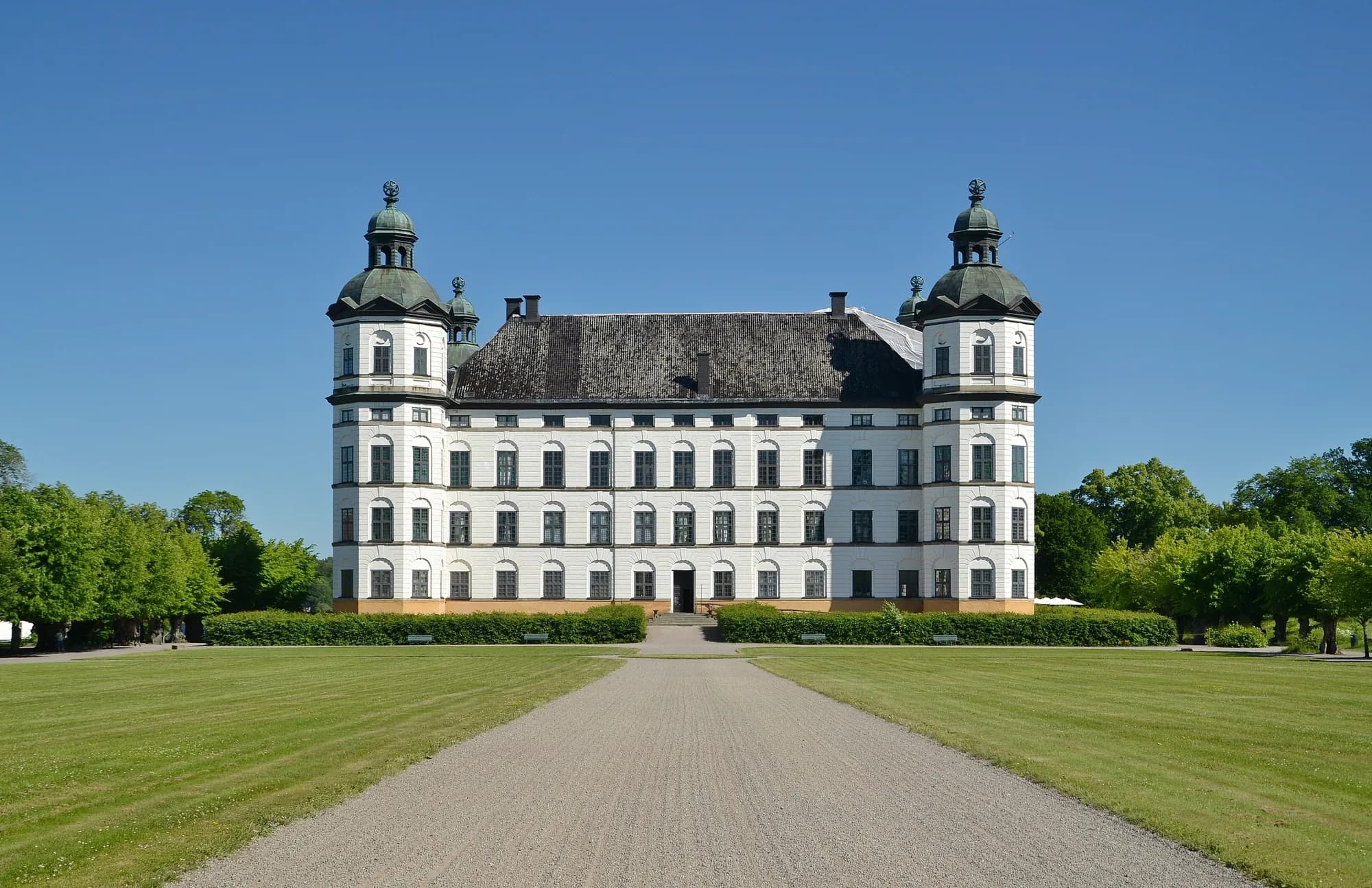
Skokloster Castle
Skoklosters slott
Sweden · Uppsala County · Near Stockholm
Built 1654 · Swedish Baroque; built 1654–1700 by Field Marshal Carl Gustav Wrangel; architects Nicodemus Tessin the Elder and Caspar Vogel; the castle was never fully completed — the Great Hall on the top floor was left unfinished at Wrangel's death in 1676 and has not been touched since; contains 50,000 objects from the Swedish imperial period and one of Europe's most important Baroque armouries
Quick Facts
- Hours
- Open May to September only. Interior access is by guided tour; check the official site for the current tour schedule.
- Entry from
- €14
- Duration
- 1.5–2 hours
- Best time
- May to September
- Nearest city
- Stockholm
Highlights
- ✦Begun in 1654 by Field Marshal Carl Gustav Wrangel, one of the most successful commanders of the Thirty Years' War, and left unfinished at his death in 1676
- ✦The top-floor Great Hall remains exactly as workers left it 350 years ago — tools on the benches, dried mortar in buckets, stucco half-finished on one wall
- ✦Holds roughly 50,000 original objects from Sweden's imperial era, including one of Europe's most important Baroque armouries
- ✦A library containing rare books and manuscripts looted from German monastic libraries during Wrangel's campaigns
- ✦Set on a peninsula in Lake Mälaren, its four Baroque corner towers visible from the water on three sides
Skip the queue with a guided tour
Skip-the-line tickets & expert guides
Sixty kilometres northwest of Stockholm, on a peninsula projecting into Lake Mälaren, stands a Baroque castle that was never finished. Skokloster was begun in 1654 by Sweden's greatest military commander, a man who had plundered much of Central Europe during the Thirty Years' War and brought the proceeds home. He died in 1676, leaving the castle still incomplete. The great hall on the top floor — tools on the workbench, lime mortar in the bucket, scaffolding poles still against the wall — has not been touched since. What Skokloster contains, as a direct result of this accident of timing, is some 50,000 original objects from Sweden's imperial era, set within an original Baroque interior that was never renovated, never updated and never emptied. It is one of the most completely preserved 17th-century interiors anywhere in the world.
Carl Gustav Wrangel (1613–1676) was a Field Marshal of the Swedish Empire at the height of its European power. Sweden in the mid-17th century was a major continental force, its territory stretching along the Baltic coast from Finland through Estonia, Latvia and Pomerania, with Swedish armies fighting across Germany, Poland and Denmark for the better part of three decades. Wrangel commanded Swedish forces during the final campaigns of the Thirty Years' War (1618–1648) and ranked among the most successful military commanders of his generation. He returned from Germany with an enormous personal fortune derived directly from war: ransoms, plunder, and the systematic stripping of German castles, monasteries and libraries. It is this fortune, and this plunder, that built and furnished Skokloster.
Wrangel commissioned the castle in 1654, engaging the architect Nicodemus Tessin the Elder, father of the architect who would later design the Stockholm Royal Palace. Tessin designed a four-winged, square Baroque palace on the standard northern European model, with four round corner towers and a central courtyard. Construction proceeded slowly: the exterior was largely complete by the 1660s, but the interiors were still being decorated when Wrangel died in 1676. The great hall on the upper floor was left mid-construction — the workmen simply stopped where they stood. No subsequent owner ever undertook its completion, and the unfinished hall became, paradoxically, one of the most historically valuable rooms in Sweden, a frozen cross-section of a 17th-century building site rather than a finished state room.
The contents of Skokloster are the direct material legacy of Wrangel's military career. The armoury holds one of the most important collections of 17th-century weapons and armour anywhere in Europe — tournament armour, ceremonial parade armour, pistols, swords and military trophies carried back from campaigns in Germany and Poland. The library contains thousands of books and manuscripts, including rare volumes looted from German monastic libraries during the war. The paintings include portraits of nearly every major figure of the Swedish imperial period, alongside Dutch and Flemish works acquired while Wrangel was campaigning in Germany. The furniture, textiles and decorative objects remain largely in their original positions, cross-referenced against inventories drawn up shortly after Wrangel's death. The castle functions, in effect, as a time capsule of Swedish imperial culture, undisturbed by the renovation cycles that have reshaped most comparable European residences.
The unfinished state hall on the top floor is the castle's most famous feature and one of the most extraordinary single rooms in any European castle open to the public. When work stopped in 1676, the masons left their tools behind: chisels, trowels and wooden mallets still lie on the workbenches exactly as they were set down 350 years ago. Buckets of long-dried mortar remain on the floor. The stucco decoration is half-finished on one wall, complete on another, and bare stone on a third. No decision was ever made to finish or restore the room; instead, it was simply locked, its contents left untouched. The Swedish National Heritage Board, which manages the castle today, has deliberately maintained this policy of non-intervention, treating the room's incompleteness as itself a historical artefact rather than an oversight to be corrected.
Skokloster sits on a peninsula in Lake Mälaren, the long lake connecting Stockholm westward into central Sweden. The castle is visible from the water on three sides, its four corner towers rising above the lake in a classic Baroque silhouette. The surrounding landscape, water, forest and flat Swedish farmland, has changed comparatively little since the 17th century, and that continuity of setting reinforces the sense of historical intactness that runs through the entire visit.
History
Field Marshal Carl Gustav Wrangel, one of the most successful Swedish commanders of the Thirty Years' War, began construction of Skokloster in 1654 using a fortune accumulated through ransoms and plunder during his German campaigns, engaging the architect Nicodemus Tessin the Elder to design a four-winged Baroque palace on a peninsula in Lake Mälaren. The exterior was largely complete by the 1660s, but decoration of the interior, including the planned Great Hall on the top floor, was still underway when Wrangel died in 1676, and construction stopped immediately, leaving the hall in its unfinished state.
No subsequent owner undertook to complete the Great Hall, and the room has remained essentially untouched since 1676, preserving tools, materials and partially finished stucco work as a direct physical record of a 17th-century building site. The wider castle, containing roughly 50,000 objects accumulated during Wrangel's military career, passed eventually into the care of the Swedish state, and is now managed by the Swedish National Heritage Board, which has maintained a deliberate policy of non-intervention regarding the unfinished hall specifically.
How to Visit
Getting there: Skokloster is 60km from Stockholm, reachable by car in about an hour via Route 263, or by seasonal boat from Sigtuna and Uppsala in summer (check schedule in advance). There is no direct train connection.
Tickets: GYG tour t1126543 covers the guided tour, required for interior access. With only 3 reviews on the listing, it falls below this site's threshold for displaying a star rating.
Seasonal note: The castle is open May to September only.
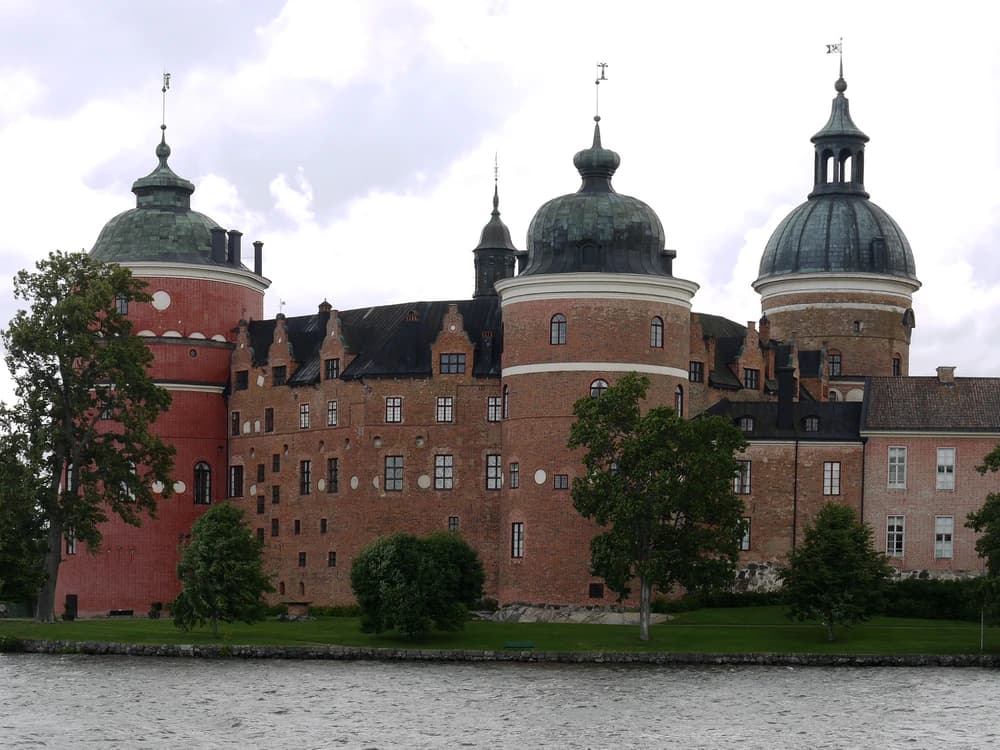
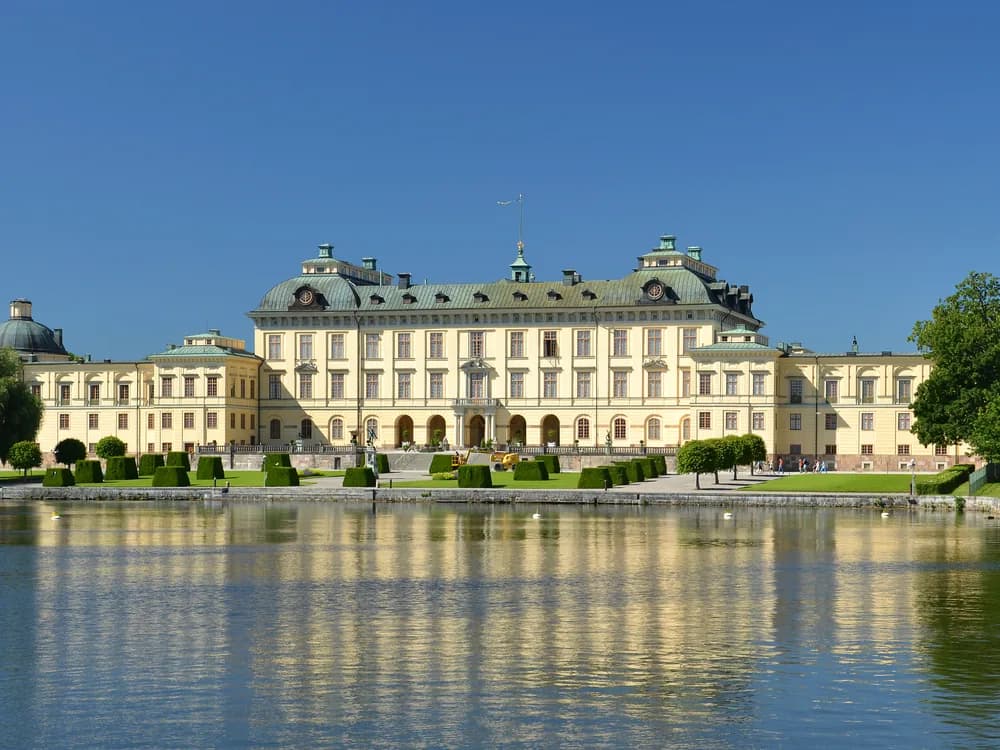
Combine with: Gripsholm Castle in nearby Mariefred and Drottningholm Palace in Stockholm form the natural context for a wider tour of Swedish royal and aristocratic castles.
Frequently Asked Questions
Construction of the Great Hall was still underway when Field Marshal Carl Gustav Wrangel, who had commissioned and funded the entire castle, died in 1676. No subsequent owner chose to complete the room, and over time its unfinished state, with tools, materials and partly finished stucco work left exactly as the builders abandoned them, came to be valued as a unique historical record in its own right. The Swedish National Heritage Board, which now manages the castle, has deliberately preserved the room's incomplete condition rather than finishing or restoring it.
Location
Skokloster 791, 746 96 Håbo, Sweden
Nearby Castles
Featured Tour
Skokloster: Castle Guided Tour
Cancellation available · Instant confirmation
Tours & Tickets
Powered by GetYourGuide
Entry from
€14/ adult