
© Unsplash
Alanya Castle
Alanya Kalesi
Turkey · Antalya Province, Turkish Riviera · Near Alanya
Built 1226 · Seljuk military architecture; constructed by Sultan Alaeddin Kayqubad I on earlier Byzantine and Roman foundations; Red Tower (Kızıl Kule) designed by Syrian architect Abu Ali al-Kettani
Quick Facts
- Hours
- Summer (April–October): daily 08:00–20:00. Winter (November–March): daily 08:00–17:00. The Red Tower and shipyard keep similar but slightly shorter hours; check locally for the cable car's operating schedule, which can vary with weather and wind conditions.
- Entry from
- €3
- Duration
- 2–4 hours (full circuit including Red Tower and İç Kale)
- Best time
- April to June, September to October (avoid peak summer heat above 35°C)
- Nearest city
- Alanya
Highlights
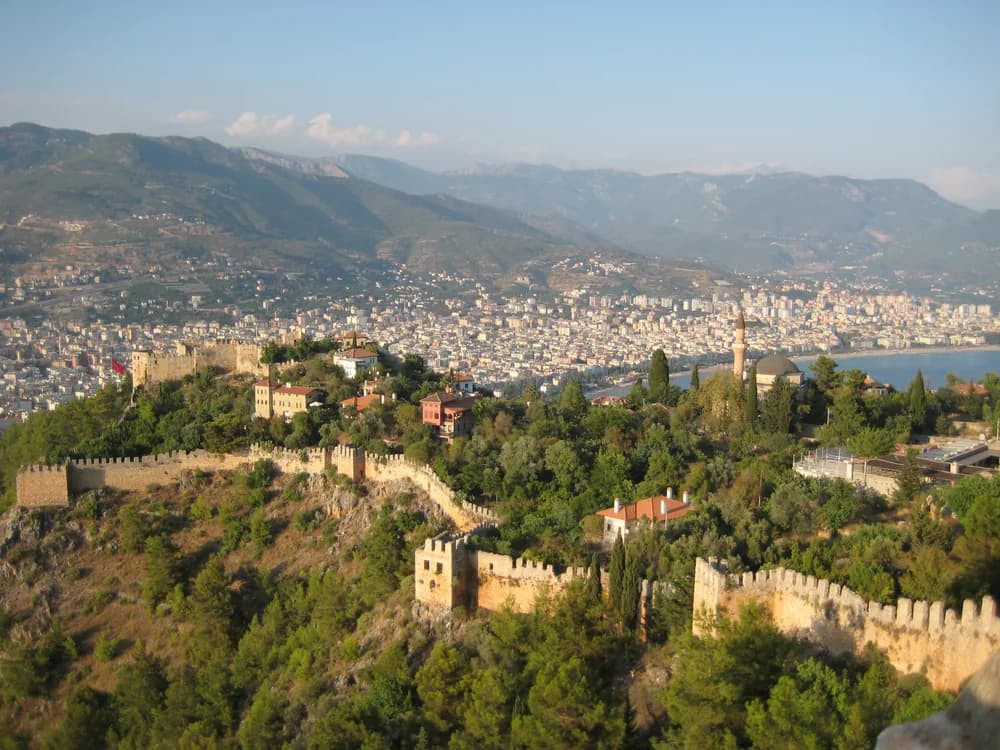
- ✦A red sandstone promontory rising 250 metres straight from the Mediterranean, wrapped by seven kilometres of walls — one of the defining images of the entire Anatolian coast
- ✦Built in just six years (1220–1226) as the winter capital of Seljuk Sultan Alaeddin Kayqubad I, who needed a Mediterranean harbour for his otherwise landlocked Sultanate of Rum
- ✦The Red Tower (Kızıl Kule) — a 33-metre octagonal harbour fortress built in 1225 by Syrian architect Abu Ali al-Kettani, now housing a small ethnography museum
- ✦The Tersane, a Seljuk-era shipyard of five vaulted bays carved directly into the cliff base — one of the only surviving Seljuk naval facilities anywhere in the world
- ✦Damlataş Cave, a stalactite cave discovered during harbour construction in 1948, with a constant 22°C, 95%-humidity microclimate that has drawn medical tourists since the 1950s
Skip the queue with a guided tour
Skip-the-line tickets & expert guides
Alanya Castle is not simply the landmark of the Turkish Riviera — it is one of the defining images of the entire Anatolian coast: a red sandstone promontory rising 250 metres straight out of the Mediterranean, its summit and slopes wrapped by seven kilometres of walls that follow the peninsula like a crown. Almost everything about the site's location was deliberate. The peninsula is nearly an island, defensible from three sides by open sea, and that single geographic fact explains why a Seljuk sultan with no prior connection to the Mediterranean coast chose it, within a matter of years, as the winter capital of his entire empire.
In 1220, Seljuk Sultan Alaeddin Kayqubad I conquered the Byzantine port of Kalanoros and renamed it Alaiye, the name that would eventually become Alanya. The Sultanate of Rum, for all its territorial reach across Anatolia, was landlocked at its core, and Alaiye gave Kayqubad a genuine Mediterranean harbour — a strategic asset worth an extraordinary construction effort. The castle itself went up between 1220 and 1226, a remarkable pace for a fortification of this scale, built to convert the peninsula's natural defensibility into a fully realised stronghold capable of controlling the harbour, the trade routes along the coast, and the sultan's own winter court.
The most photographed single structure on the site is the Red Tower, an octagonal harbour fortress 33 metres high, built in 1225 by the Syrian architect Abu Ali al-Kettani, who designed fortifications across the Seljuk realm. Built in the red sandstone that gives both the tower and, by extension, the city its name, it was positioned to bombard any ship attempting to force the harbour entrance, and today houses a small ethnography museum — a mandatory stop before climbing to the castle proper. Just below it, carved directly into the base of the cliff, the Tersane shipyard's five vaulted bays have survived for eight centuries largely intact, one of the only surviving Seljuk naval facilities anywhere in the world; ships were built and repaired here under cover, sheltered from weather and from the prying eyes of any approaching enemy fleet.
The summit fortress, the İç Kale, is reached either by the steep three-kilometre road or, far more comfortably in summer heat, by cable car. Inside its walls stand the remains of a Byzantine church later converted into a mosque, a cistern that once supplied the garrison with water, and the tomb of Arap Evliya. The views from the 250-metre summit are exceptional by any standard: the full curve of Cleopatra Beach below, the harbour and the Red Tower at the base of the cliff, and on clear days the Taurus Mountains rising inland. Adjacent to the main circuit, Damlataş Cave — a stalactite cavern discovered accidentally during harbour construction in 1948 — adds an unusual postscript: its constant 22°C temperature and 95% humidity have made it a destination for asthma sufferers since the 1950s, and most castle tours now include a stop inside it as standard.
History
The promontory at Alanya had been fortified in some form since Roman and Byzantine times, when the port — then known as Kalanoros — served as a minor coastal settlement on the southern Anatolian shore. Its transformation into a major fortified city came in 1220, when the Seljuk Sultan Alaeddin Kayqubad I conquered it from Byzantine control and renamed it Alaiye, recognising that its near-island geography, defensible from the sea on three sides, made it an ideal winter capital for a sultanate that otherwise had no Mediterranean coastline.
Construction of the castle proceeded from 1220 to 1226 at a pace remarkable for the scale of the project, eventually enclosing the entire peninsula within roughly seven kilometres of walls and towers. The Red Tower, completed in 1225, was the work of the Syrian architect Abu Ali al-Kettani, whose fortification designs appear across the wider Seljuk realm, and the shipyard built into the base of the cliff allowed the sultanate to construct and maintain a Mediterranean fleet under cover and protection. Kayqubad I used Alaiye as his winter residence, and the city flourished as a centre of trade and shipbuilding under Seljuk patronage through the 13th century.
After the decline of the Seljuk Sultanate of Rum, the city passed through the hands of various Anatolian beyliks before being absorbed into the Ottoman Empire in the 15th century, retaining its strategic importance as a coastal stronghold throughout. The Byzantine church inside the İç Kale was converted into a mosque during this period, a transformation still visible in the building's surviving fabric. In the 20th century, the discovery of Damlataş Cave during harbour construction in 1948 added an unexpected new layer to the site's history, and the castle complex — including the Red Tower, the shipyard, and the İç Kale — has since been preserved and developed as one of Turkey's most visited historical and natural attractions on the Mediterranean coast.
How to Visit
Getting there and the cable car: A cable car runs from Alanya's city centre to the summit, sparing visitors the steep three-kilometre road climb — strongly recommended in the summer heat, when temperatures regularly exceed 35°C. The Red Tower and the Tersane shipyard sit at sea level on the waterfront, within easy walking distance of central Alanya, and are best visited before or after the summit climb rather than as a separate trip.
Tickets and tour options: Entry to the museum sections costs a nominal €3 for adults, with children free. Tour t656884, combining the castle, the cable car and Damlataş Cave at a notably low price point, is the most booked option among visitors and covers the full circuit efficiently in around 3 to 3.5 hours.
Timing the full circuit: The castle grounds are extensive — allow at least 2 to 3 hours for the complete visit covering the Red Tower, the shipyard, and the İç Kale summit, and budget extra time if you also want to linger at Damlataş Cave. Spring (April–June) and early autumn (September–October) offer the most comfortable conditions for the climb and the exposed summit walk; midsummer heat above 35°C makes the ascent considerably harder, even with the cable car shortening the climb to the top.
Frequently Asked Questions
The Seljuk Sultanate of Rum controlled most of central and eastern Anatolia but had no reliable Mediterranean coastline. When Sultan Alaeddin Kayqubad I conquered the Byzantine port of Kalanoros in 1220 and renamed it Alaiye, he gained a defensible, near-island peninsula with a natural harbour — exactly what his landlocked sultanate lacked. He built the castle between 1220 and 1226 and used the city as his winter capital, giving the Seljuks Mediterranean trade access and a base for shipbuilding.
Location
İç Kale, 07400 Alanya, Antalya, Turkey
Nearby Castles
Featured Tour
Alanya: Castle Sunset Tour, Damlataş Cave & Cable Car Options
Cancellation available · Instant confirmation
Tours & Tickets
Powered by GetYourGuide
Entry from
€3/ adult