
Departing from Helsinki
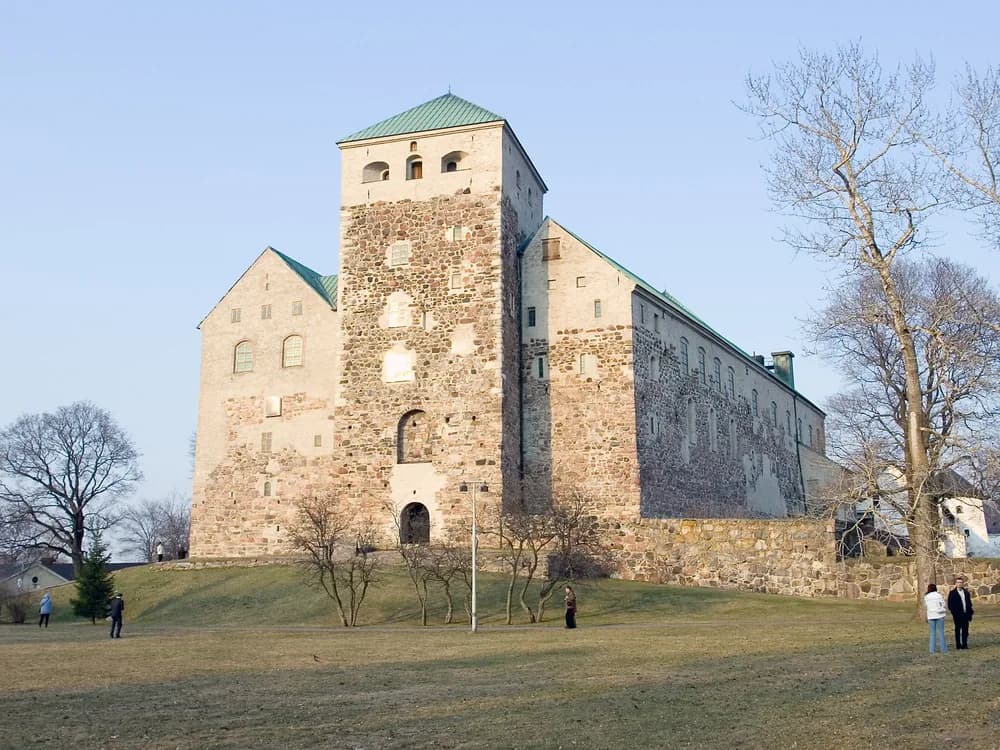
From Helsinki: Turku Castle & Cathedral – Finland's Medieval Capital
Finland's largest medieval fortress and the city that was the kingdom's capital for 500 years — a full-day journey to where Finnish history began
From
€60/ person
Rating
★ 4.6(185)
Duration
Full day (9 hours)
Rating
4.6 ★ (185 reviews)
Languages
English
Group size
Max 12 people
About This Tour
Turku was the capital of Finland for 500 years — the seat of Finnish bishops, Swedish governors and the administrative centre of a country that was simultaneously the eastern frontier of the Swedish Empire and the western frontier of Russia. Turku Castle, begun in 1280 at the mouth of the Aura River, is Finland's largest medieval castle and the most important fortress in Finnish history: a complex of Gothic halls, Renaissance apartments, dungeon prisons and fortified towers that has been continuously expanded and modified for 750 years. The castle served as the residence of Finnish dukes and Swedish royalty, a prison that held Duke John of Finland and his wife Catherine Jagiellon (ancestors of Sigismund III Vasa, King of Poland and Sweden), and a grain warehouse before its restoration in the 20th century. Turku Cathedral, Finland's national church, was begun in the 13th century and contains the tombs of Finland's medieval bishops and nobles — the closest equivalent to Westminster Abbey in Finnish history. Together they represent the foundations of Finnish medieval civilisation.
Highlights
- ✓Turku Castle — Finland's largest medieval fortress, 750 years of continuous use from 1280 to the 20th century
- ✓The Renaissance apartments of Duke John — the most lavish medieval interiors in Finland, created for the Finnish duke and his Polish princess in the 1560s
- ✓Turku Cathedral — Finland's national church and medieval pantheon, begun in the 13th century
- ✓The Aura River waterfront — medieval Turku seen from the river, the castle at its mouth, the cathedral spire beyond
- ✓The story of Catherine Jagiellon — the Polish princess imprisoned in Turku Castle who became Queen of Poland and mother of the Polish-Swedish king
- ✓Old Market Hall (1896) — Finland's oldest surviving market hall, for lunch and local produce
Ready to book this tour?
Free cancellation · Instant confirmation
Itinerary
Head west from Helsinki along the Finnish south coast toward Turku. The guide introduces the history of Finland under Swedish rule (1249–1809) — the period during which Turku served as Finland's capital, its castle as the seat of royal governors, and its cathedral as the headquarters of the Finnish church. The guide covers the unique position of Finland in Scandinavian history: a country that was simultaneously the easternmost province of the Swedish Empire and the westernmost target of Russian expansion, meaning Turku Castle was always both a royal residence and a frontier fortress.
Turku Castle was begun in 1280 by Swedish crusaders who had conquered Finland during the Northern Crusades — the same campaign that built the Livonian Order castles of Latvia and Estonia. The original grey-granite keep was expanded through the 14th and 15th centuries into a complex of towers and halls, then transformed in the 1560s by Duke John of Finland (later King John III of Sweden) into a Renaissance palace with extraordinary vaulted halls, painted ceilings, and the most lavish interiors in medieval Finland. Duke John used the castle as his court while governing Finland as his personal duchy — and it was here that his wife Catherine Jagiellon (of the Polish-Lithuanian Jagiellonian dynasty) was imprisoned with him from 1563 to 1567, after John's brother King Eric XIV declared them traitors. Their son, born in captivity in the castle, became Sigismund III Vasa — simultaneously King of Poland and King of Sweden. The castle museum covers 750 years of Finnish history through the archaeology of the castle.
Turku Cathedral is the national church of Finland — the mother church of the Lutheran Church of Finland and the burial place of Finland's medieval bishops, Swedish royalty who died in Finland, and the nobles who shaped the country's history. The cathedral was begun in the 1280s in a Gothic style and has been repeatedly expanded, damaged by fire, and rebuilt. The Chapel of St Henry (Finland's patron saint, an English bishop who came to Finland with a Swedish crusade in 1155 and was murdered by a Finnish peasant he had just converted) contains the chapel's medieval frescoes — the oldest painted images in Finland. The guide covers the extraordinary story of the Reformation in Finland, when Bishop Mikael Agricola translated the New Testament into Finnish in 1548 — creating written Finnish for the first time.
What's Included
- ✓Return transport from Helsinki
- ✓Professional English-speaking guide
- ✓Turku Castle entry and guided tour
- ✓Turku Cathedral visit
- ✓Small group (max 12)
Not Included
- ✗Lunch (free time near Old Market Hall — excellent local fish and Finnish cuisine)
- ✗Tips for guide and driver
Insider Tips
The Aura River waterfront in Turku is one of Finland's most pleasant urban landscapes — walk the length of it between the castle and the cathedral along the river embankment
The Old Market Hall (Vanha Kauppahalli) near the cathedral is Finland's oldest market hall and an excellent lunch stop — try Finnish salmon soup (lohikeitto) and fresh archipelago rye bread
Turku Archipelago is visible from the castle mouth — the largest archipelago in the world by number of islands, with over 50,000 islands between Turku and Stockholm
In the cathedral, look for the tomb of Karin Månsdotter — the Finnish peasant girl who became Queen of Sweden as the wife of the mentally unstable King Eric XIV
Frequently Asked Questions
Why was Turku the capital of Finland?
Turku was the most important city in Finland during the period of Swedish rule (1249–1809) because of its position: it sits at the mouth of the Aura River, with good harbour access to Sweden across the Baltic, making it the natural administrative centre. As the seat of the Finnish bishops from 1249 and the location of the Swedish crown's main castle in Finland, Turku became the de facto capital. Helsinki was only designated the capital in 1812 — after Finland was ceded to Russia — because Tsar Alexander I wanted a capital closer to St Petersburg and less associated with Swedish rule.
Who was Catherine Jagiellon?
Catherine Jagiellon (1526–1583) was a Polish princess of the Jagiellonian dynasty — the ruling house of Poland, Lithuania, Hungary and Bohemia — who married Duke John of Finland in 1562. When her husband was imprisoned by his jealous brother King Eric XIV of Sweden for alleged treason in 1563, Catherine chose imprisonment with him at Turku Castle rather than freedom without him. The couple were held in the castle for four years. Catherine's son (born in captivity) became Sigismund III Vasa, simultaneously King of Poland (1587–1632) and King of Sweden (1592–1599) — one of the most powerful rulers of his era.
What is the Turku Archipelago?
The Turku Archipelago (also called the Archipelago Sea) is the largest archipelago in the world by number of islands, with over 50,000 islands of varying sizes between Turku and the Åland Islands. The archipelago was a major Viking and medieval sea route between Scandinavia and the Baltic states, and its fishing communities maintained distinct Swedish-speaking cultures for over a thousand years. Today it is one of Finland's most popular sailing and kayaking destinations.
More Tours from Helsinki
Powered by GetYourGuide
From
€60
per person
Free cancellation available on most dates · Secure booking
Meeting point
Helsinki city centre — exact departure point confirmed at booking
From
€60/ person