
Departing from Vilnius
Vilnius: Trakai Island Castle, Kernave Hill Forts & Gediminas Tower
The last pagan state in Europe — an island fortress, five ancient hill forts and the Gothic tower of the Grand Duchy
From
€150/ person
Rating
★ 4.8(60)
Duration
Full day (8 hours)
Rating
4.8 ★ (60 reviews)
Languages
English
Group size
Max 6 people
About This Tour
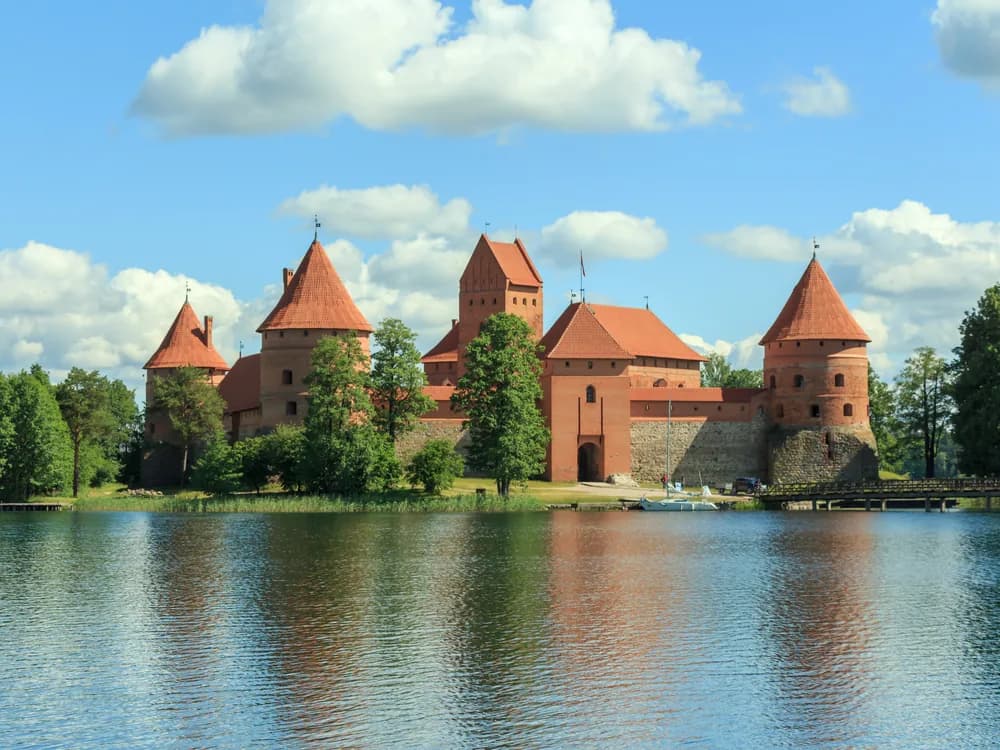
Lithuania was the last pagan country in Europe — converted to Christianity only in 1387, after resisting crusading orders for nearly 200 years. Its medieval castles are therefore unlike anything else in Europe: built not just for defence but as expressions of a unique Baltic pagan culture that outlasted every other in the continent. This private tour covers three sites that together tell the story of the Grand Duchy of Lithuania — the medieval state that at its peak stretched from the Baltic Sea to the Black Sea, the largest political entity in 15th-century Europe. Gediminas Tower in Vilnius marks the capital the Grand Duke founded around 1323. Kernave's five UNESCO-protected hill forts represent the spiritual and political capital of the pre-Christian Lithuanian tribes — a site of continuous settlement for over 10,000 years. And Trakai Island Castle — its red-brick towers and drawbridges reflected in the still water of Lake Galvė — is the most photographed castle in the Baltic states, the medieval seat of the Grand Dukes who once ruled half of Europe.
Highlights
- ✓Gediminas Tower — the symbol of Vilnius and Lithuania, crowning the hill where Grand Duke Gediminas founded his capital in 1323
- ✓Trakai Island Castle — the most iconic castle in the Baltics, built on a peninsula in Lake Galvė by Grand Duke Vytautas the Great
- ✓Kernave hill forts — five UNESCO-protected prehistoric earthworks, capital of Lithuania before the Grand Duchy period
- ✓The Karaim community of Trakai — a Turkic people brought from Crimea by Vytautas in 1397 as his personal bodyguard, still living in Trakai today
- ✓The story of the last pagan country in Europe — Lithuania resisted Christian conversion for 200 years longer than any other European people
- ✓Kibin — the traditional Karaim pastry, a meat-filled crescent of crispy dough, eaten in Trakai for 600 years
Ready to book this tour?
Free cancellation · Instant confirmation
Itinerary
Begin at Gediminas Hill in the heart of Vilnius Old Town, where the remaining octagonal tower of Gediminas Castle marks the spot where Grand Duke Gediminas founded his capital around 1323. According to the founding legend, Gediminas dreamed of an iron wolf howling on a hill above a river — his pagan priest interpreted this as a sign that a great city would rise here, as powerful as the howl of a thousand wolves. The tower houses a museum of Lithuanian history and offers panoramic views over Vilnius Old Town (UNESCO) and the confluence of the Neris and Vilnia rivers.
Drive northwest to Kernave, the UNESCO-protected archaeological site that was the spiritual and political capital of Lithuania before Vilnius. Five extraordinary earthwork hill forts rise from the Neris River valley like a series of green pyramids — each the site of a successive fortified settlement dating from the Iron Age through the medieval period. The guide covers 10,000 years of continuous settlement in this valley and explains why Kernave was chosen as the ritual centre of pre-Christian Lithuania. The Archaeology Museum houses extraordinary objects from Bronze Age burials, Viking-era trade goods, and Lithuanian tribal jewellery — the material culture of Europe's last pagan culture.
Trakai Island Castle was built by Grand Duke Vytautas the Great between 1409 and 1430 — the same ruler who led the combined Polish-Lithuanian army to the Battle of Grunwald (1410), the largest land battle in medieval European history, which broke the power of the Teutonic Knights forever. The castle occupies a peninsula in Lake Galvė connected to the shore by two drawbridges. The castle museum contains collections of medieval armour, coins and the extraordinary cultural material of the Karaim people — Turkic Jews brought from Crimea by Vytautas in 1397 as his personal bodyguard, who still maintain their unique culture, language and wooden prayer houses (kenesas) in Trakai today. Before returning to Vilnius, try kibin — the Karaim crescent pastry filled with seasoned meat, made and sold in Trakai for 600 years.
What's Included
- ✓Hotel pickup and drop-off in Vilnius
- ✓Private vehicle with driver
- ✓Professional English-speaking guide throughout
- ✓Trakai Island Castle entry
- ✓Kernave Archaeology Museum entry
- ✓Private tour (max 6 people)
Not Included
- ✗Gediminas Tower entry (~€6 — optional)
- ✗Lunch in Trakai (free time, kibin highly recommended)
- ✗Boat trip on Lake Galvė around the castle (optional, ~€10)
- ✗Tips for guide and driver
Insider Tips
Try kibin in Trakai — the traditional Karaim crescent pastry filled with meat, made by the same families for 600 years. Senoji Kibinine restaurant on Karaimų Street is the most authentic.
The reflections of Trakai Castle in Lake Galvė are most dramatic in early morning or late afternoon
Kernave is often skipped by visitors who don't know it — it is one of the most important archaeological sites in northern Europe
Lithuania is the most underrated medieval destination in Europe — the Grand Duchy at its height was larger than France, Germany, Poland and England combined
Frequently Asked Questions
Who were the Karaim people of Trakai?
The Karaim (or Karaites) are a Turkic people of Jewish faith, originally from Crimea, who follow only the Hebrew Bible and reject the Talmud. Grand Duke Vytautas brought approximately 383 Karaim families from Crimea to Trakai in 1397 to serve as his personal bodyguard. Today about 60 Karaim remain in Trakai, maintaining their unique wooden prayer houses (kenesas), cuisine and language. Their crescent pastry, kibin, is now the national snack of Trakai.
How large was the Grand Duchy of Lithuania at its peak?
At its maximum extent in the late 14th century under Vytautas the Great, the Grand Duchy stretched from the Baltic Sea to the Black Sea — covering modern Lithuania, Latvia, Belarus, most of Ukraine, and parts of Poland and Russia. It was the largest state in Europe at the time. The Grand Duchy was formally united with Poland in 1386 and together they formed the Polish-Lithuanian Commonwealth, the dominant power in Central and Eastern Europe for two centuries.
Why was Lithuania the last pagan country in Europe?
Lithuania resisted the crusading Teutonic and Livonian Orders for nearly 200 years, fighting off military campaigns that converted every other Baltic and Slavic people. The Lithuanian tribal confederation was politically sophisticated enough to resist militarily while occasionally accepting baptism diplomatically when it served political purposes. The formal Christianisation came only in 1387, when Grand Duke Jogaila accepted Catholic baptism as part of the agreement to become King of Poland.
More Tours from Vilnius
Powered by GetYourGuide
From
€150
per person
Free cancellation available on most dates · Secure booking
Meeting point
Hotel pickup in Vilnius — address confirmed at booking
From
€150/ person