
Departing from Lisbon
From Lisbon: Medieval Portugal – Batalha, Tomar, Alcobaça & Óbidos
Four UNESCO World Heritage Sites in one day — from Knights Templar fortress to Portugal's most perfect medieval village
From
€70/ person
Rating
★ 4.8(320)
Duration
Full day (12 hours)
Rating
4.8 ★ (320 reviews)
Languages
English
Group size
Max 12 people
About This Tour
This tour traces the founding myths of Portugal in a single extraordinary day north of Lisbon. The Batalha Monastery was built to fulfil a vow made by King João I before the Battle of Aljubarrota in 1385 — the battle that secured Portuguese independence from Castile. Tomar's Convent of Christ was the headquarters of the Knights Templar in Portugal, later absorbed by the Order of Christ that funded Portugal's Age of Discovery. Alcobaça Monastery is the medieval pantheon of the Portuguese royal house, containing the extraordinary Gothic tombs of King Pedro I and Inês de Castro — surrounded by the effigies of their enemies, crushed beneath the lovers' feet. And Óbidos — a perfectly preserved medieval village still entirely encircled by its 12th-century walls — was the traditional wedding gift of Portuguese kings to their queens. Four sites, four centuries, four chapters in the story of how a small nation became the world's first global empire.
Highlights
- ✓Batalha Monastery (UNESCO) — built to fulfil a king's vow before the battle that secured Portuguese independence
- ✓Convent of Christ in Tomar (UNESCO) — Knights Templar headquarters, with the unique circular Charola and famous Manueline window
- ✓Alcobaça Monastery (UNESCO) — the royal pantheon of medieval Portugal, with the extraordinary Gothic tombs of Pedro and Inês
- ✓Óbidos (UNESCO) — the perfect medieval village, a wedding gift to Portuguese queens for 600 years
- ✓The most celebrated love story in Portuguese history: Dom Pedro I and Inês de Castro
- ✓Manueline architecture — Portugal's unique 16th-century style combining Gothic structure with maritime imagery in stone
Ready to book this tour?
Free cancellation · Instant confirmation
Itinerary
The Monastery of Santa Maria da Vitória at Batalha was built between 1386 and 1517 to fulfil a vow made by King João I on the eve of the Battle of Aljubarrota (1385) — the decisive Portuguese victory over Castile that secured the kingdom's independence. The guide covers the extraordinary Gothic and Manueline architecture, the Unfinished Chapels (some of the most beautiful Gothic stonework in Europe), and the Royal Cloister containing the tombs of João I and Philippa of Lancaster alongside their son Henry the Navigator, whose expeditions began Portugal's Age of Discovery.
The Convent of Christ in Tomar was the headquarters of the Knights Templar in Portugal — and when the Templar Order was abolished in 1312, the Portuguese king simply renamed it the Order of Christ and kept everything. The Charola, the circular Templar church built in the 12th century modelled on the Church of the Holy Sepulchre in Jerusalem, allowed knights to worship on horseback. The extraordinary Manueline window on the Chapter House exterior is one of the most complex pieces of decorative stonework in the world — festooned with maritime imagery, anchor chains, coral, armillary spheres and the face of a man among the stone ropes.
The Monastery of Alcobaça was founded by Afonso I, first King of Portugal, following his defeat of the Moors in 1147. It became the royal pantheon of medieval Portugal. The guide tells the story of Dom Pedro I and Inês de Castro: Inês was the Galician noblewoman secretly married to Crown Prince Pedro, murdered by political rivals. When Pedro became king he had her murderers executed and their hearts ripped out, then had her body exhumed, dressed in royal robes and enthroned beside him at a formal court ceremony, forcing the nobility to kneel and kiss the hand of her decomposed corpse. Their Gothic tombs face each other across the chapel — so at the Resurrection they will see each other's faces first.
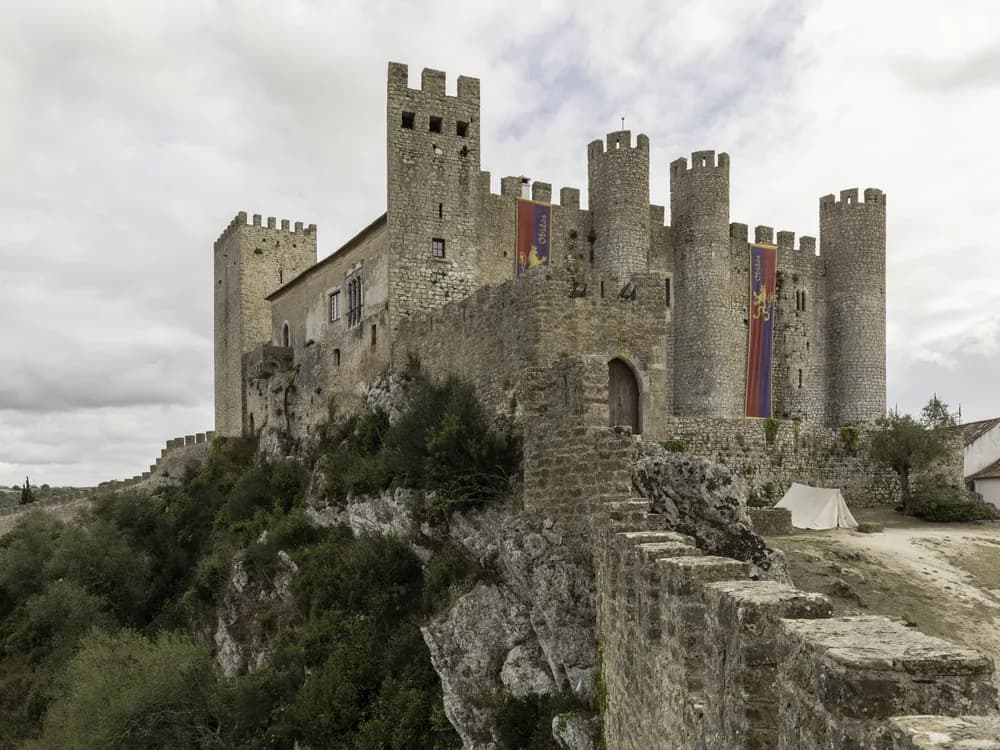
Óbidos is a medieval village entirely encircled by 12th-century castle walls — one of the most perfectly preserved medieval urban landscapes in Portugal. The castle was given by King Afonso II to his wife Urraca in 1228 as a wedding gift — a tradition that continued for 600 years, with successive Portuguese kings giving Óbidos to their queens. Walk the full circuit of the battlements for views over the village and surrounding plains. The village is famous for its ginjinha (cherry liqueur) served in chocolate cups — the local recipe dates to the 17th century.
What's Included
- ✓Hotel pickup and drop-off in Lisbon
- ✓Air-conditioned private minivan
- ✓Expert English-speaking guide
- ✓Batalha Monastery entry
- ✓Convent of Christ entry
- ✓Alcobaça Monastery entry
- ✓Small group (max 12)
Not Included
- ✗Lunch (free time in Tomar)
- ✗Ginjinha tasting in Óbidos (optional, ~€3)
- ✗Tips for guide and driver
Insider Tips
The Manueline window at Tomar is best photographed from the garden below at mid-morning
The story of Pedro and Inês is Portugal's greatest medieval tragedy — ask your guide to tell it in full
Óbidos is famous for its ginjinha served in chocolate cups — do not leave without trying one
The Batalha Unfinished Chapels are the most beautiful part of the monastery — allow extra time there
Book well in advance: this small-group tour (max 12) sells out weeks ahead in summer
Frequently Asked Questions
What is the story of Pedro and Inês de Castro?
Inês de Castro was a Galician noblewoman who became the secret wife of Crown Prince Pedro of Portugal, murdered by political rivals in 1355 during Pedro's absence. When Pedro became king in 1357, he had her murderers tracked down, executed, and their hearts ripped out. He then had Inês exhumed, dressed in royal robes, and enthroned beside him at a formal court ceremony, forcing the nobility to kneel and kiss her hand. Their double tomb at Alcobaça, commissioned by Pedro himself, is one of the greatest Gothic sculptures in Europe.
What is the Charola at Tomar?
The Charola (or Rotunda) is the original Templar church at Tomar, built in the 12th century as a circular building modelled on the Church of the Holy Sepulchre in Jerusalem. The design allowed knights to worship on horseback — riding around the central octagonal reliquary without dismounting. When the Templars were absorbed into the Order of Christ, the Charola was integrated into a larger church, creating the extraordinary architectural complex visible today.
Is Óbidos worth visiting?
Yes — Óbidos is one of the most perfectly preserved medieval villages in Portugal, its entire circuit of 12th-century walls still intact and walkable. The cherry liqueur (ginjinha) served in chocolate cups is genuinely unique to Óbidos and unmissable.
More Tours from Lisbon
Powered by GetYourGuide
From
€70
per person
Free cancellation available on most dates · Secure booking
Meeting point
Hotel pickup in Lisbon — address confirmed at booking
From
€70/ person