
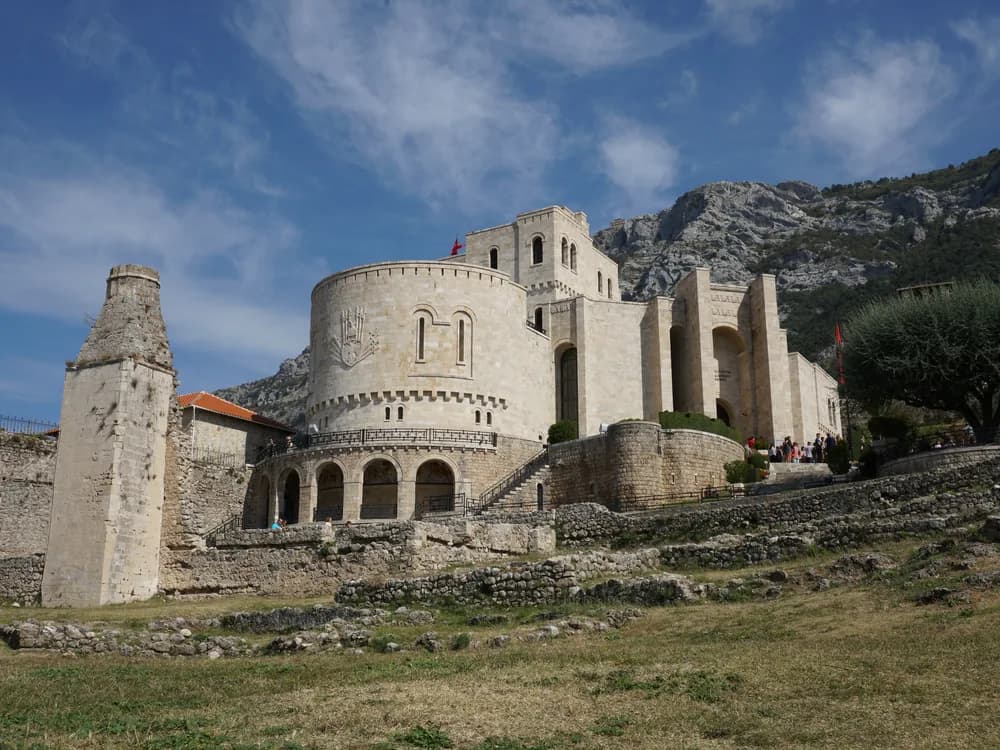
© Unsplash
Krujë Castle
Kalaja e Krujës
Albania · Durrës County · Near Tirana
Built 400 · Illyrian origins, substantially rebuilt as a medieval Albanian fortress in the 15th century under Gjergj Kastrioti Skanderbeg; Skanderbeg Museum added 1982
Quick Facts
- Hours
- April–October: daily 09:00–19:00. November–March: daily 09:00–16:00. The Skanderbeg Museum and castle grounds keep the same hours; the Old Bazaar shops below operate on their own schedule, generally daytime hours only.
- Entry from
- €5
- Duration
- 2–3 hours (castle, museum, and Old Bazaar)
- Best time
- April to October
- Nearest city
- Tirana
Highlights
- ✦Skanderbeg's 25-year resistance — taken as a child hostage to the Ottoman court, trained as an Ottoman commander, then defecting back to Albania in 1443 and defeating Ottoman forces in battle 13 times before his death in 1468
- ✦Four Ottoman sieges of Krujë — 1450, 1466 and 1467 all repelled, with the fortress finally falling only in 1478, a decade after Skanderbeg's death, when no one remained to defend it
- ✦The Skanderbeg Museum (1982), a distinctive Brutalist-vernacular building designed by Pranvera Hoxha, displaying replica armour, Ottoman battle standards and historical documents — the original helmet is in Vienna, the original sword in Istanbul's Topkapi Palace
- ✦Views south from the ridge over the coastal plain and the Adriatic, from a castle perched on a narrow spur 32 km north of Tirana
- ✦The Old Bazaar below the castle, a still-working Ottoman-era arcade of artisan workshops selling hand-woven textiles, copperwork and traditional embroidered costumes
Skip the queue with a guided tour
Skip-the-line tickets & expert guides
Krujë Castle is Albania's most emotionally charged historic site — the fortress where Gjergj Kastrioti Skanderbeg held back the Ottoman Empire for 25 years and made himself a hero of Christendom. The castle perches on a narrow ridge above the town of Krujë, 32 kilometres north of Tirana, with views south over the coastal plain to the Adriatic. Skanderbeg's story is extraordinary even by the standards of medieval biography: taken as a child hostage to the Ottoman court, trained as an Ottoman military commander, and given high rank within the Sultan's army — before defecting back to Albania in 1443, rallying the Albanian lords under his command, and defeating Ottoman forces in battle thirteen times before his death in 1468. He became the most celebrated Christian military leader of the 15th century in Western Europe, lauded by popes and princes who saw in his resistance a bulwark against Ottoman expansion; his death, followed a decade later by the fall of Krujë itself, is still commemorated in Albania today.
The site's fortifications reach back to Illyrian times in the 5th century BC, but the castle's defining identity belongs entirely to the Kastrioti family, whose seat it became from the 14th century, and above all to Skanderbeg himself. His return to Albania in 1443 — defecting during a battle against Hungarian forces and retaking Krujë from its Ottoman garrison by deception — opened 25 years of organised Albanian resistance against the Ottoman Empire at the height of its expansion into the Balkans. The Ottomans besieged Krujë repeatedly and were repelled every time during Skanderbeg's lifetime: in 1450 under Sultan Murad II, and again in 1466 and 1467 under Mehmed II, the same sultan who had conquered Constantinople. Each failure to take the castle while Skanderbeg lived only deepened his legend across Christian Europe.
The fortress finally fell in 1478, a full decade after Skanderbeg's death in 1468 — a fact that says as much about the man as about the walls. Without him to organise the defence, Albanian resistance collapsed, and the 1478 fall of Krujë effectively ended organised Albanian opposition to Ottoman rule until the 20th century. The Skanderbeg Museum, built in 1982 within the castle walls and designed by Pranvera Hoxha — daughter of Albania's communist-era leader Enver Hoxha — in a distinctive Brutalist-vernacular style, now houses replicas of Skanderbeg's armour and helmet, captured Ottoman battle standards, and historical documents tracing the resistance in detail. The originals are scattered across Europe: Skanderbeg's actual helmet is held in Vienna's Kunsthistorisches Museum, and his sword in the Topkapi Palace in Istanbul, an irony given that it was the Ottomans he spent his life fighting.
History
Krujë's hilltop was first fortified in Illyrian times, around the 5th century BC, taking advantage of the narrow ridge's natural defensibility above the surrounding plain. By the 14th century the site had become the seat of the Kastrioti family, one of the leading noble houses of medieval Albania, and it was into this family that Gjergj Kastrioti — later known by his Ottoman title Skanderbeg — was born around 1405.
Skanderbeg was sent as a child hostage to the Ottoman court, where he was educated, converted, and eventually rose to command Ottoman troops under the name Iskander Bey. In 1443, during a battle alongside Ottoman forces against the Hungarians, he defected, rode for Krujë, and retook the castle from its Ottoman garrison through a forged order of surrender. From this base he united much of the Albanian nobility into a sustained military resistance against the Ottoman Empire that lasted 25 years, defeating Ottoman armies in battle on at least thirteen occasions and repelling direct sieges of Krujë in 1450, 1466 and 1467 — the latter two led personally by Sultan Mehmed II, fresh from his conquest of Constantinople in 1453.
Skanderbeg died in 1468 in Lezhë, and without his leadership the Albanian resistance gradually disintegrated. Krujë itself held out for another decade before finally falling to the Ottomans in 1478, ending organised Albanian military opposition for over four centuries. The castle and town remained under Ottoman administration until Albanian independence in 1912. In 1982, Albania's communist government built the Skanderbeg Museum within the castle walls, both to commemorate the national hero and to anchor the regime's own nationalist narrative — the building's striking Brutalist-vernacular design, by architect Pranvera Hoxha, remains one of the more distinctive structures of its era in the Balkans.
How to Visit
Getting there: Krujë is 32 km north of Tirana via the SH1 road, about 40 minutes by car, or reachable by frequent minibuses departing from Tirana's Sheshi Shqiponjës (Eagle Square). The castle sits above the town at the top of a short, steep climb from the centre.
Tickets and timing: Entry to the Skanderbeg Museum costs around 500 ALL (roughly €5); the castle grounds themselves are separately accessible and the museum interior is the main paid attraction. The site is open April to October roughly 09:00–19:00 and shorter hours in winter.
The Old Bazaar: Below the castle, the Old Bazaar (Çarshia e Vjetër) is one of the best-preserved Ottoman bazaars in the Balkans — a long covered arcade of small workshops selling traditional Albanian crafts: hand-woven textiles, copperwork, traditional daggers, and embroidered costumes. Unlike many bazaars elsewhere in the region, this one remains primarily a working artisan market rather than a tourist souvenir strip, and it is worth at least an hour of unhurried browsing.
Combine with Sari Salltik: Most visitors pair Krujë with Sari Salltik, a Bektashi holy site with a cave shrine at 1,176 metres offering panoramic views over the surrounding region, as part of a half-day or full-day tour from Tirana.
Frequently Asked Questions
Gjergj Kastrioti, known as Skanderbeg, was an Albanian nobleman taken as a child hostage to the Ottoman court, where he was trained as a military commander before defecting back to Albania in 1443. From Krujë Castle he led a 25-year resistance against the Ottoman Empire, winning battles repeatedly and repelling direct sieges of the castle under two sultans. He is Albania's national hero, commemorated in statues, currency, and the national flag's double-headed eagle, and is remembered across Europe as one of the most celebrated Christian military leaders of the 15th century.
Location
Rruga e Kalasë, Krujë, Albania
Nearby Castles
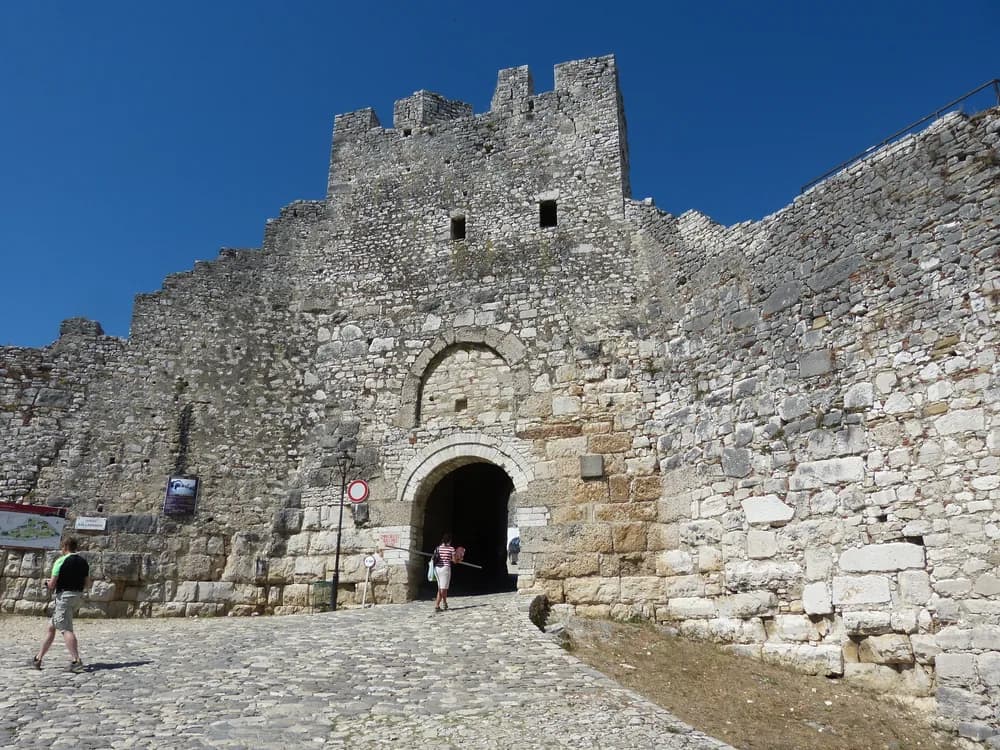
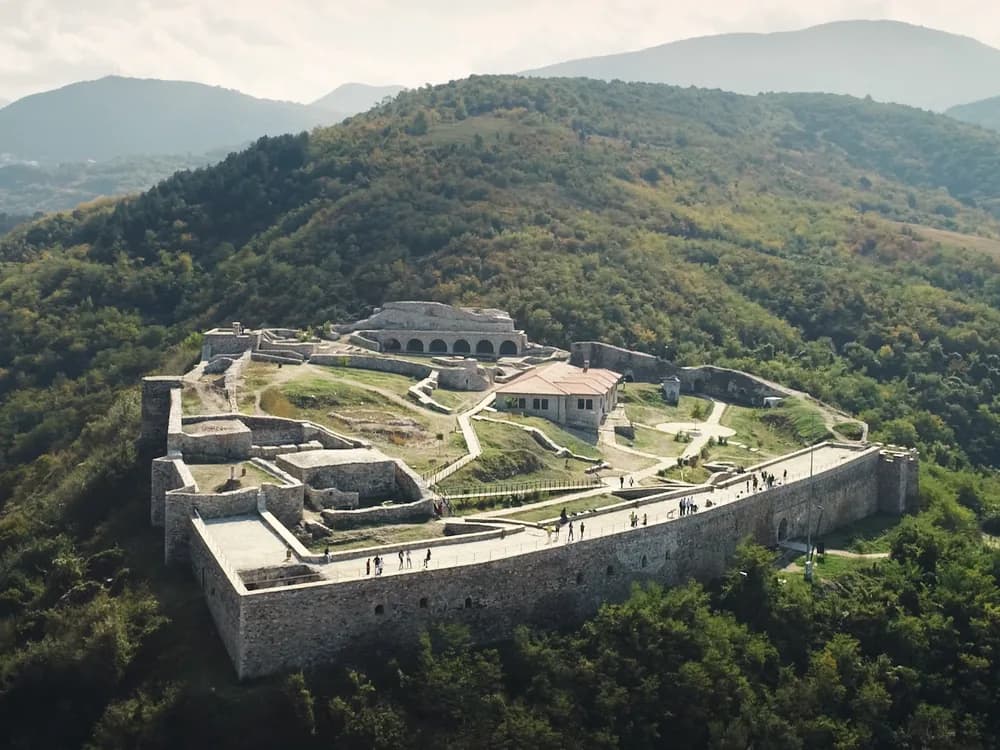
Featured Tour
From Tirana: Kruja Castle, Old Bazaar & Sari Salltik View
Cancellation available · Instant confirmation
Tours & Tickets
Powered by GetYourGuide
Entry from
€5/ adult