
© Unsplash
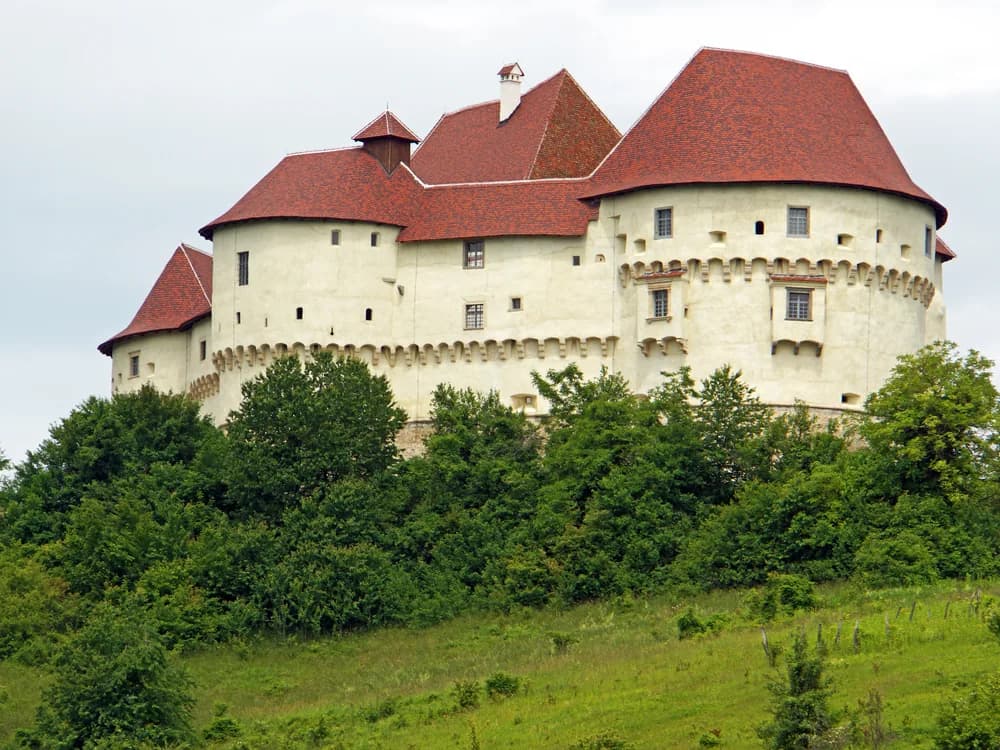
Veliki Tabor Castle
Dvorac Veliki Tabor
Croatia · Krapina-Zagorje County · Near Zagreb
Built 1334 · Gothic / Renaissance
Quick Facts
- Hours
- Open Tue–Sun. Extended to 18:00 May–Sep. Closed Mondays and Jan 1, Easter, Nov 1, Dec 25–26.
- Entry from
- €5
- Duration
- 1–1.5 hours
- Best time
- May to September — the Zagorje hills are at their most lush and green
- Nearest city
- Zagreb
Highlights
- ✦One of the best-preserved medieval castles in Croatia, combining Gothic and Renaissance architecture in a pentagonal plan
- ✦The tragic legend of Veronika of Desinić — a love story between a young nobleman and a peasant girl — is embedded in the castle's walls
- ✦Four massive semicircular towers guard the corners, each offering different views across the Zagorje hills
- ✦The castle museum preserves original furnishings, weapons, and a collection of medieval sacral art
- ✦Set on a forested hilltop with panoramic views over the rolling Zagorje landscape — completely unlike the coastal Croatia most visitors see
Skip the queue with a guided tour
Skip-the-line tickets & expert guides
Veliki Tabor stands on a forested hilltop above the Zagorje hills, and the combination of its Gothic and Renaissance architecture, its four semicircular towers, and the rolling Croatian countryside around it creates something genuinely surprising: a Central European medieval castle that feels nothing like the Dalmatian coast that most visitors associate with Croatia. The Zagorje region north of Zagreb — a landscape of gentle hills, vineyards, and manor houses — is Croatian castle country, and Veliki Tabor is its finest specimen.
The castle's pentagonal Gothic core dates from the 14th century, when the lords of Celjski built a defensive tower on this strategic hilltop. The four massive semicircular towers were added in the early 16th century under the Ratkaj family, who held the castle for almost 300 years and gave it the Renaissance defensive features that supplement the Gothic core. The combination of the two periods — visible in the difference between the central tower's angular Gothic masonry and the rounded Renaissance corner towers — gives Veliki Tabor its distinctive architectural character.
The castle's most famous story is its legend. Veronika of Desinić, a young peasant girl of exceptional beauty, is said to have fallen in love with Herman II of Celje, a young nobleman, in the early 15th century. Herman's father, Count Herman II of Celje, reportedly had Veronika drowned in the castle and her body bricked into the castle walls. Whether or not the story is true — historians debate it — Veronika's skull, supposedly found during 19th-century restoration work, is preserved in the castle chapel and adds an authentically macabre note to what is otherwise a beautifully maintained medieval site.
History
The first mention of Veliki Tabor in records dates to 1334. The castle was built by the lords of Celjski, a powerful noble family from what is now Slovenia, who controlled much of the Zagorje region in the 14th and 15th centuries. The castle passed to the Ratkaj family in the early 16th century following the extinction of the Celjski male line, and it was the Ratkaj family who undertook the major expansion of the 1500s, adding the four semicircular towers in response to the Ottoman threat.
The Ratkaj family held Veliki Tabor from approximately 1507 to 1793 — nearly three centuries — during which the castle remained the centre of their regional power. The family is associated with the Veronika of Desinić legend, which places the tragic events in the early 15th century under the Celjski lords. Whether the story is historical fact or romantic invention, it has become inseparable from the castle's identity.
After the Ratkaj family died out in 1793, Veliki Tabor passed through several owners and gradually fell into disrepair. By the early 20th century it was a ruin. Restoration work began in 1993 and has continued incrementally, restoring the roofs, stabilising the walls, and creating the museum that visitors see today. The castle was opened to the public in 2011.
How to Visit
Getting there from Zagreb: Veliki Tabor is about 55 km north-west of Zagreb — roughly 1 hour by car. Take the A2 motorway towards Ljubljana (Slovenia), exit at Zabok, and follow regional roads towards Desinić. By public transport, buses run from Zagreb to Desinić via Pregrada, but services are infrequent — check the timetable in advance. A rental car from Zagreb is much more practical for a Zagorje day trip.
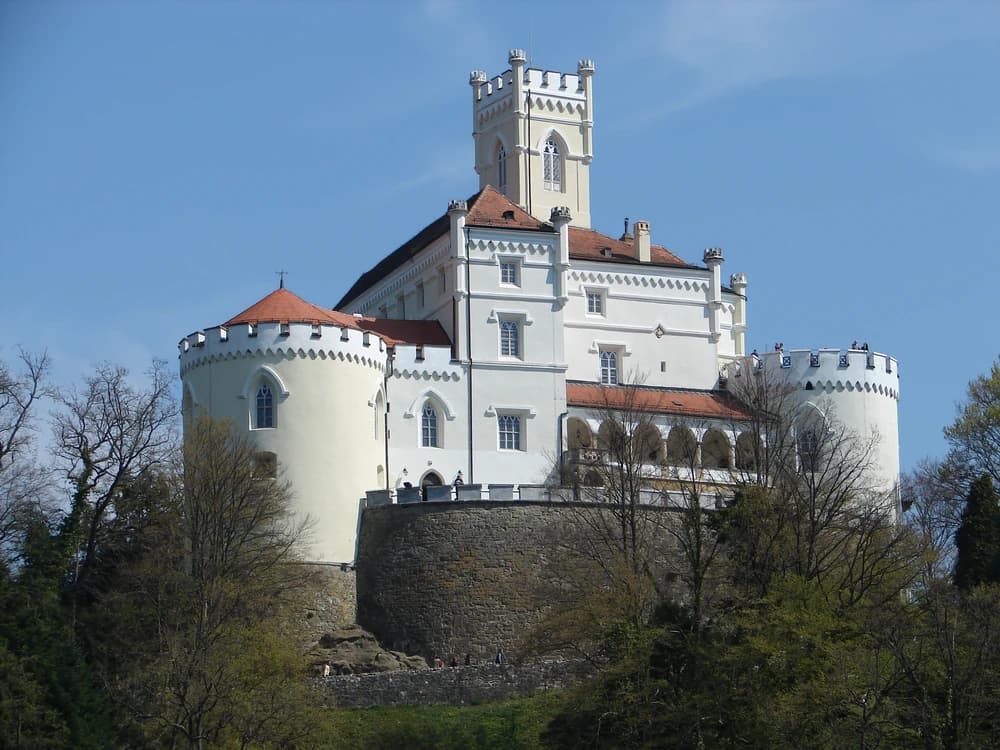
Combine with Trakošćan: The classic Zagorje day trip from Zagreb combines Veliki Tabor (Gothic, hilltop) with Trakošćan Castle (Romantic, lakeside), about 25 km north-east. The contrast between the two — one a rugged medieval fortress, the other a 19th-century fairy-tale palace — is excellent. Allow the whole day and plan lunch in one of the Zagorje village restaurants between the two castles.
The legend: Ask at the entrance about the Veronika of Desinić story before entering — the castle chapel where her skull is preserved is easy to miss without context.
Frequently Asked Questions
Veronika of Desinić is the tragic heroine of Veliki Tabor's most famous story. According to the legend, she was a beautiful peasant girl who fell in love with Herman II of Celje, son of the powerful Count Herman II. The Count, disapproving of his son's relationship with a commoner, had Veronika drowned or walled up alive in the castle — accounts differ. Her skull was reportedly discovered during 19th-century restoration and is preserved in the castle chapel. The story has been the subject of Croatian poetry, novels, and plays, and is embedded in the cultural identity of the Zagorje region.
Location
Veliki Tabor 1, 49214 Desinić, Croatia
Nearby Castles
Tours & Tickets
Powered by GetYourGuide
Entry from
€5/ adult