
© Unsplash
Munich Residenz
Münchner Residenz
Germany · Bavaria · Near Munich
Built 1385 · Renaissance, Baroque, Rococo, Neoclassical
Quick Facts
- Hours
- April–mid-October: daily 09:00–18:00. Mid-October–March: daily 10:00–17:00. Last entry 1 hour before closing. The Cuvilliés Theatre keeps separate, more limited hours — check residenz-muenchen.de before visiting.
- Entry from
- €9
- Duration
- 2–3 hours
- Best time
- Year-round; the Treasury is exceptional in winter when the crowds are at their lightest
- Nearest city
- Munich
Highlights
- ✦The Treasury (Schatzkammer) — one of the finest Renaissance goldsmithery collections in the world, including a St George statuette set with 2,291 diamonds, 406 rubies and 21 emeralds, and the 11th-century Crown of the Bavarian Queens
- ✦The Antiquarium — the oldest surviving Renaissance hall in Germany, 66 metres long and built 1568–1571, its vaulted ceiling painted floor to floor with allegorical figures and topographical views of Bavaria
- ✦The Cuvilliés Theatre — one of the most perfect Rococo theatres in existence, four tiers of gilded private boxes dismantled piece by piece in 1943 to survive the bombing and reassembled in the 1950s, still used for performances today
- ✦The Ancestral Portrait Gallery — 121 portraits of the Wittelsbach dynasty in unbroken chronological sequence from the 14th to the 20th century, a complete genealogical record in paint
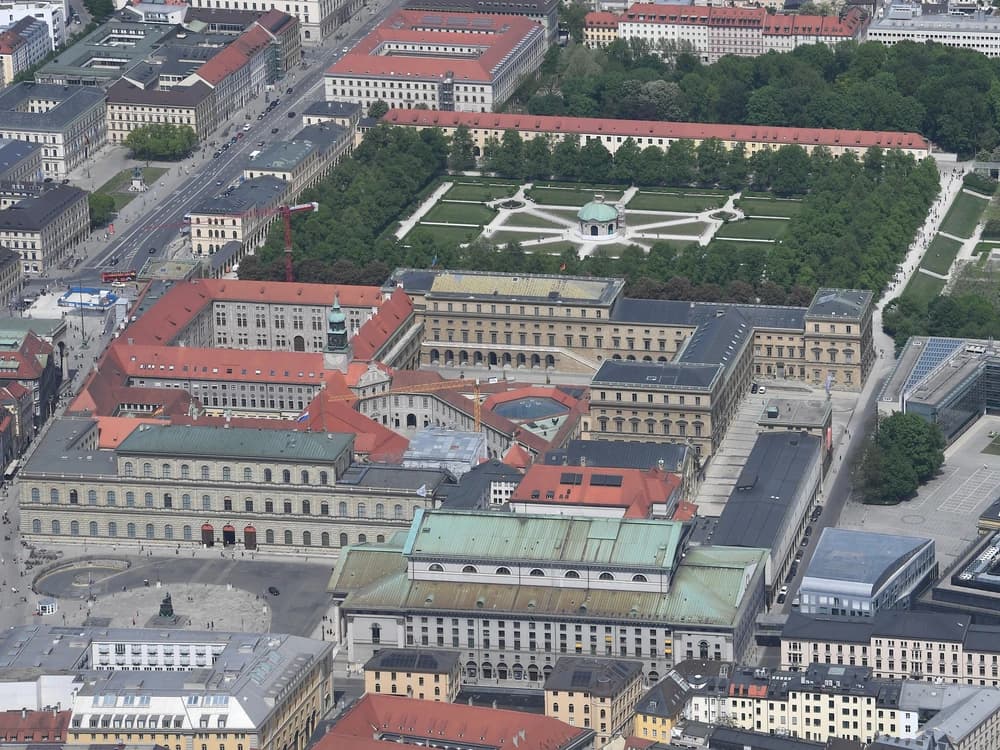
- ✦The Hofgarten — the formal Italian-style garden beside the palace, with the Diana Pavilion at its centre, where Münchners still eat lunch and play chess under the arcades
Skip the queue with a guided tour
Skip-the-line tickets & expert guides
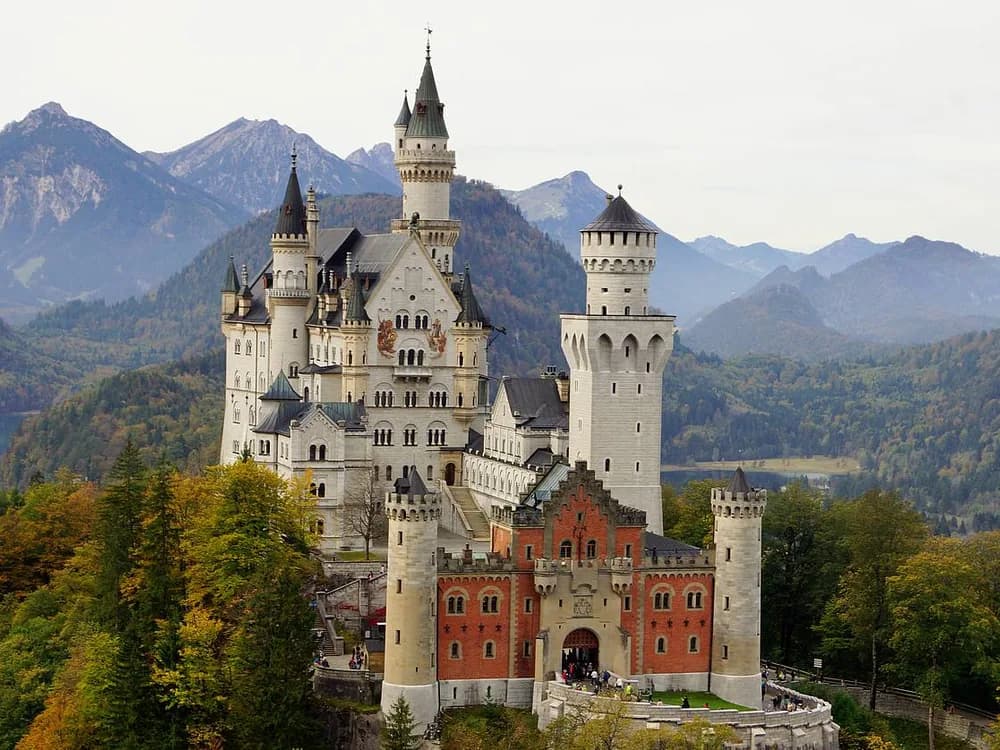
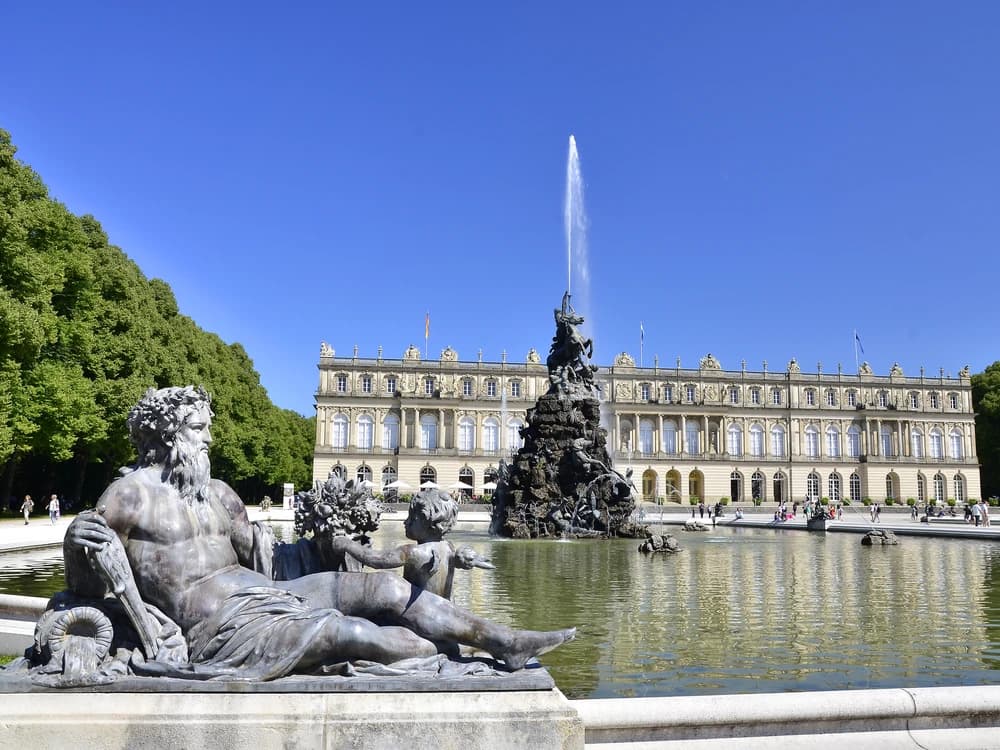
The Munich Residenz is not a country retreat or an architectural fantasy — it is an urban palace that grew continuously for nearly 400 years inside what is now the centre of a modern city. Walking its 130-room circuit means passing through rooms built in the 16th, 17th, 18th and 19th centuries in direct sequence, each reflecting the taste of the Wittelsbach duke or king who commissioned it, the accumulated weight of a single dynasty ruling Bavaria from this address for nearly half a millennium. Unlike Neuschwanstein or Herrenchiemsee, there is no single unifying fantasy here — only the steady, compounding ambition of one family across four centuries.
The Residenz is also, unavoidably, the story of postwar reconstruction. Allied bombing in 1944 gutted or destroyed nearly all 130 rooms, reducing one of Europe's great palace interiors to a shell of scorched stone. What visitors see today is largely the result of a reconstruction project that took 40 years and was only substantially completed in 1985 — one of the most ambitious museum restorations in European history, and a deliberate statement by postwar Munich about what its cultural inheritance was worth rebuilding.
The objects in the Schatzkammer were never simply jewels. The portable altars, reliquaries, crystal vessels and goldsmithery on display were instruments of political theology, symbols of Catholic Bavaria's cultural standing within the Holy Roman Empire. The St George statuette, commissioned for the Order of St George around 1600 and set with thousands of precious stones, is arguably the single greatest piece of Renaissance goldsmithery to survive intact anywhere — and it owes its survival to the foresight of being evacuated from Munich in 1939, years before the bombs fell.
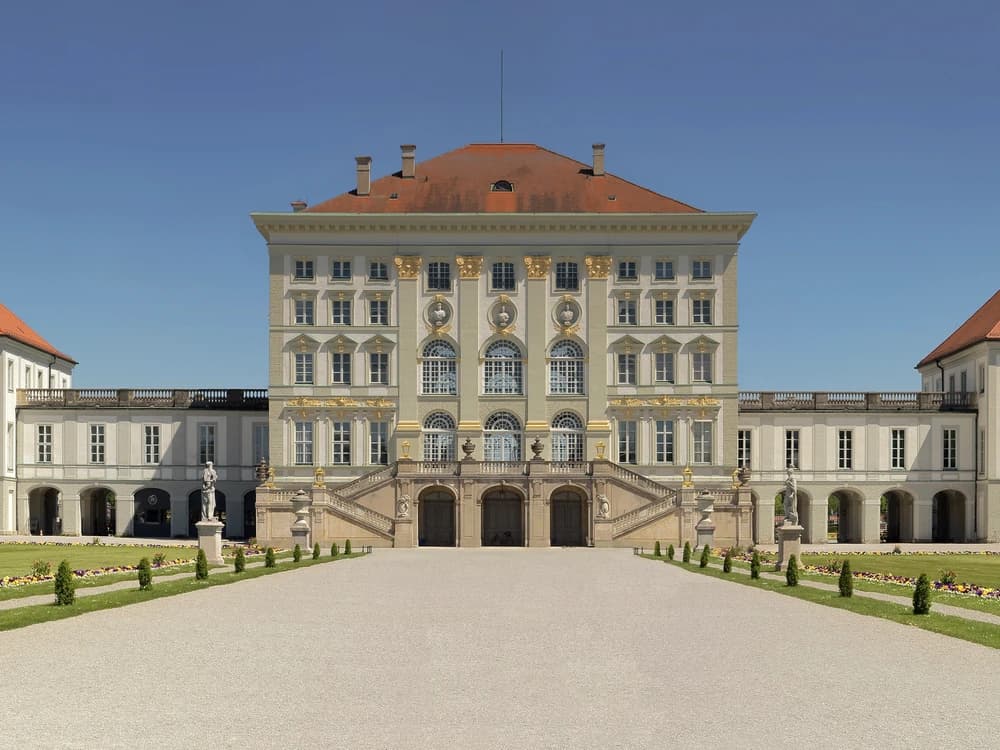
The Wittelsbachs were the most prolific palace builders in German history, and the Residenz is where they actually lived while commissioning the more famous fantasies elsewhere — Nymphenburg, Linderhof, Herrenchiemsee, Neuschwanstein. Understanding those buildings properly means understanding the Residenz first: the working seat from which an entire dynasty's architectural ambition radiated outward across Bavaria. That the fragile carved woodwork of the Cuvilliés Theatre was dismantled and hidden away while the surrounding stone structure burned in 1944 says something specific about what Munich valued most — and the decision to rebuild it as a working theatre rather than a static exhibit, still staging opera under the same gilded boxes, completes that statement.
History
Duke Stephen III of Wittelsbach transferred the Bavarian ducal court from the Alter Hof to the Neuveste — the 'New Fortress' — on the present site in 1385, beginning the Residenz's four-century development as the dynastic centre of Bavaria. Under Duke Albrecht V, the court commissioned the Antiquarium between 1568 and 1571 as the centrepiece of a Renaissance palace meant to rival anything south of the Alps, and Maximilian I's systematic expansion in the early 17th century turned the site into the first major palatial complex of its kind in Bavaria.
Growth continued steadily over the following two centuries: Baroque additions in the 1610s and 1620s, the Rococo Cuvilliés Theatre built by court architect François de Cuvilliés between 1751 and 1753, and a Neoclassical remodelling of the state apartments under Ludwig I in the early 19th century. By the time of its pre-war peak, the Residenz comprised some 130 rooms holding roughly 17,000 individual works of art — one of the densest concentrations of court culture in Germany.
Allied air raids on 25 April and 13 July 1944 left the Residenz a gutted shell, its roofs collapsed and its interiors burned out. The recovery that followed was extraordinary precisely because so much had been saved in advance: most of the major collections, including the Treasury's contents, had been evacuated or buried in 1939 in anticipation of war. The reconstruction of the principal rooms took some 40 years and was substantially complete by 1985, standing today as one of postwar Europe's most significant acts of deliberate cultural restoration.
How to Visit
Getting there: The Residenz sits at the northern edge of Munich's Altstadt, one block from Odeonsplatz (served by U-Bahn lines U3, U4, U5 and U6) and a 5-minute walk from Marienplatz. The main entrance is on Residenzstraße; the garden entrance faces Max-Joseph-Platz.
Tickets: The Residenzmuseum ticket (€9 adults, free under 18) covers the full 130-room circuit. The Treasury (Schatzkammer, €9 adults) is ticketed separately but can be combined with the museum for €16. The Cuvilliés Theatre has its own entry (€5). Seeing all three properly takes a half-day.
Strategy: The Treasury is non-negotiable — allow 45 minutes and take the audioguide. The Antiquarium is the single most impressive room in the building but is frequently rushed by visitors on a tight schedule; don't let that happen to you. If time is limited, focus on the Treasury, the Antiquarium and the Ancestral Portrait Gallery as a tight 2-hour visit. The Cuvilliés Theatre keeps limited opening hours, so check ahead. Finish with a walk through the Hofgarten, and the English Garden is a short walk further on if you have the afternoon free.
Frequently Asked Questions
Nymphenburg was the Wittelsbachs' summer retreat outside the city, built around a single Baroque vision and set in formal parkland. The Residenz was their working winter palace inside Munich itself, accumulated over nearly 400 years across multiple architectural eras rather than built to one plan. Most visitors find the Residenz richer in sheer density of rooms and objects — especially the Treasury — while Nymphenburg offers a more unified architectural and garden experience.
Location
Residenzstraße 1, 80333 München, Germany
Nearby Castles
Featured Tour
Munich: Residenz Palace and Hofgarten Skip-the-Line Tour
Cancellation available · Instant confirmation
Tours & Tickets
Powered by GetYourGuide
Entry from
€9/ adult