
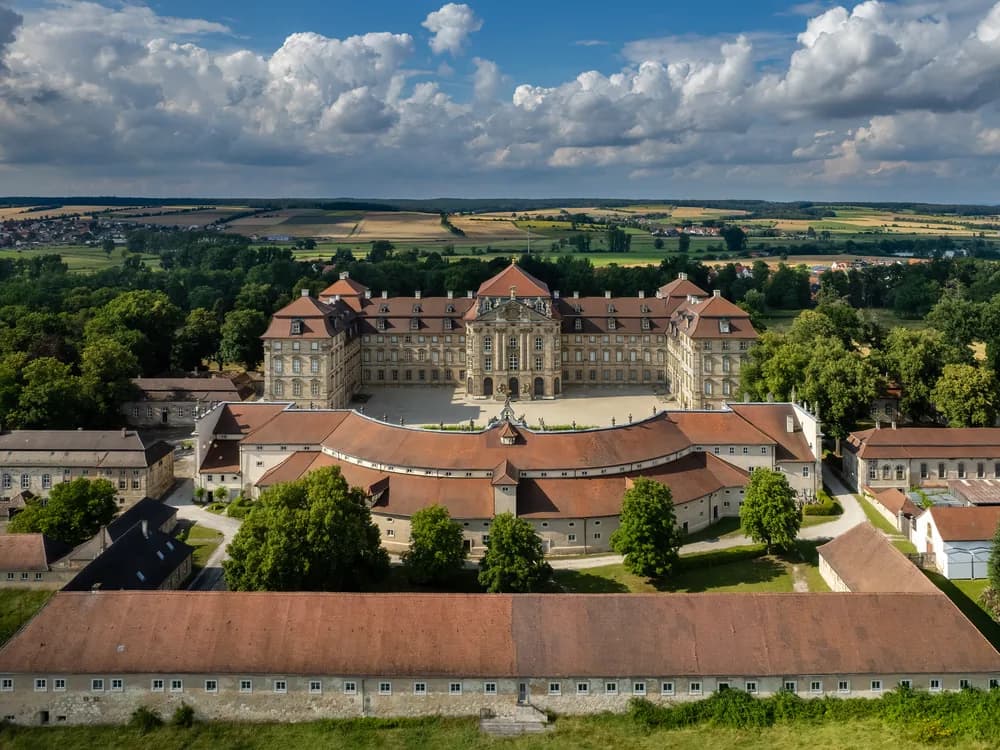
© Castles & Palaces
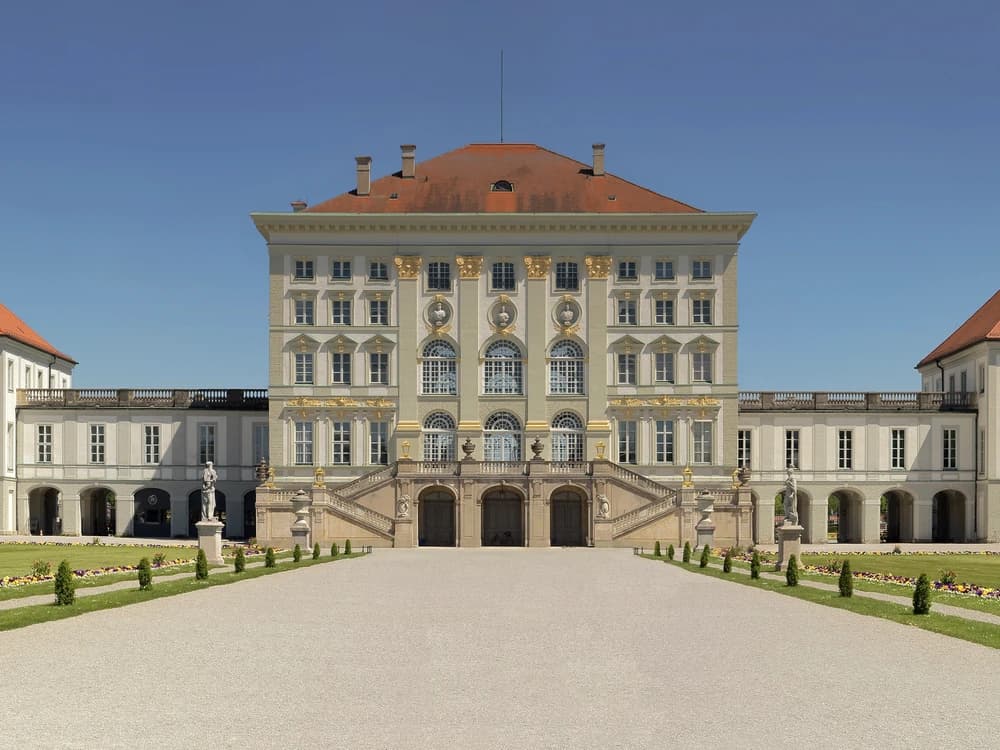
Weissenstein Castle
Schloss Weißenstein
Germany · Bavaria · Near Bamberg
Built 1711 · Baroque; built 1711–1718 by Lothar Franz von Schönborn, Elector-Archbishop of Mainz and Prince-Bishop of Bamberg; architects Johann Dientzenhofer and Johann Lucas von Hildebrandt; the grand staircase (Treppenhaus) by Hildebrandt is one of the most celebrated Baroque staircases in Germany; privately owned by the Schönborn-Wiesentheid family
Quick Facts
- Hours
- Open April to October only, by guided tour at set times. Check the official site for the current schedule before travelling.
- Entry from
- €18
- Duration
- 1–1.5 hours
- Best time
- April to October
- Nearest city
- Bamberg
Highlights
- ✦Built in just seven years (1711–1718), an astonishing pace for a palace of its scale, by one of the most powerful churchmen in the Holy Roman Empire
- ✦Johann Lucas von Hildebrandt's triple-flight grand staircase, ranked alongside the Würzburg Residence staircase as one of the two great Baroque staircases of Germany
- ✦A private gallery holding works by Rubens, Van Dyck, Rembrandt, Titian and Murillo — a collection of genuine international significance, rarely visited
- ✦Privately owned by the Counts of Schönborn-Wiesentheid since construction, never nationalised, sold, or converted into a state museum
- ✦Ceiling frescoes by Johann Michael Rottmayr crowning the stairwell, painted in close collaboration with Hildebrandt's architectural design
Skip the queue with a guided tour
Skip-the-line tickets & expert guides
Twenty-five kilometres south of Bamberg, in the agricultural flatlands of Franconia where the landscape is gentle and the villages are small, stands one of the least-known great Baroque palaces in Germany. Schloss Weißenstein at Pommersfelden was built in just seven years between 1711 and 1718, an astonishing speed for a palace of its scale, by one of the most powerful princes of the Church in the Holy Roman Empire. It has been privately owned by the same family since it was built. It has never been converted into a museum, a hotel, or a public institution. It is, quietly and almost privately, among the finest Baroque interiors in Bavaria.
Lothar Franz von Schönborn held two of the most powerful ecclesiastical positions in the Empire simultaneously: Elector-Archbishop of Mainz, the highest-ranking of the Imperial Electors, and Prince-Bishop of Bamberg. His family was the greatest patron of Baroque architecture in early 18th-century Germany — Schönborn palaces and churches are spread across Würzburg, Vienna, Bruchsal and Pommersfelden, a network of building projects that collectively defined an era of German ecclesiastical architecture. The palace at Pommersfelden was Lothar Franz's personal summer residence, built on land he purchased with his own funds rather than ecclesiastical revenue, designed specifically to receive the greatest minds and rulers of Europe as his private guests. He collaborated closely on the design throughout, corresponding personally with his architects about individual details of the building.
The main palace was designed by Johann Dientzenhofer, a member of the famous Dientzenhofer architectural dynasty responsible for most of the great Baroque buildings of Bohemia and Franconia. The staircase, the unquestioned showpiece of the interior, was designed separately by Johann Lucas von Hildebrandt, the Viennese architect who was simultaneously working for Prince Eugene of Savoy on the Belvedere palaces in Vienna. Hildebrandt's staircase at Weißenstein is a triple-flight hall rising through three full storeys in a single continuous gesture, framed by curved gallery balustrades beneath ceiling frescoes by Johann Michael Rottmayr. It ranks alongside the Würzburg Residence staircase as one of the two great Baroque staircases of Germany, and architectural historians regularly treat the two as a linked pair.
Schloss Weißenstein contains one of the most important private art collections in Germany, assembled by the Schönborn family across three centuries. The Gemäldegalerie holds works by Rubens, Van Dyck, Rembrandt, Titian and Murillo, a collection of genuine international significance that remains comparatively unknown precisely because the palace sits outside any mainstream tourist itinerary. The collection has never been systematically published or catalogued for general audiences in the way that comparable state-owned holdings typically are. The mirror gallery, the library and the private apartments are likewise preserved largely as they stood in the 18th century, with none of the curatorial intervention typical of a converted museum space.
Unlike most German Baroque palaces, Weißenstein has not been nationalised, sold to a foundation, or handed over to a regional museum authority. It has remained the property of the Counts of Schönborn-Wiesentheid since construction was completed, and the family still lives in parts of the castle today. Access is by guided tour only, run at fixed times rather than continuously. The family's uninterrupted ownership has produced a particular kind of authenticity: the rooms feel inhabited rather than curated, maintained with the personal attention of people still living alongside the collection rather than the institutional rigour of a state-run heritage body.
For architectural historians, the staircase at Weißenstein functions as a primary document in the development of European Baroque spatial design. Hildebrandt's solution, opening the full volume of the stairwell to view from the entrance through its triple-flight scheme, directly influenced the later staircase at the Würzburg Residence, designed by Balthasar Neumann, who is known to have visited Pommersfelden before completing his own design. Seen in that order, Weißenstein first and Würzburg second, the later staircase reveals a context and a debt that is otherwise easy to miss.
History
Lothar Franz von Schönborn, Elector-Archbishop of Mainz and Prince-Bishop of Bamberg, built Schloss Weißenstein as his private summer residence between 1711 and 1718, funding the project from his own resources rather than ecclesiastical revenue. He commissioned Johann Dientzenhofer to design the main palace structure and separately engaged the Viennese architect Johann Lucas von Hildebrandt to design the building's celebrated triple-flight grand staircase, completed with ceiling frescoes by Johann Michael Rottmayr.
The palace has remained in the unbroken ownership of the Schönborn-Wiesentheid family since its completion, never passing into state, municipal or institutional hands, which has allowed the family's substantial private art collection, including works by Rubens, Van Dyck, Rembrandt, Titian and Murillo, to remain in place largely as originally assembled. The family continues to occupy parts of the palace today, and access for visitors is provided exclusively through scheduled guided tours.
How to Visit
Getting there: Pommersfelden is 25km south of Bamberg, about 30 minutes by car or by bus (line 222 from Bamberg bus station, running hourly). There is no train connection to Pommersfelden.
Tickets: GYG tour t1224531 covers the guided tour. With only 5 reviews on the listing, it falls below this site's threshold for displaying a star rating.
Language note: Tours are currently conducted in German only, and at least one visitor review has specifically noted the absence of an English option. Visitors who do not speak German should be aware no English commentary is provided, though the interiors themselves are visually self-explanatory.
Seasonal note: The palace is open April to October only, with tours run at set times — check the website before travelling. The formal garden and stable courtyard can be viewed without a ticket.
Frequently Asked Questions
No. Guided tours of Schloss Weißenstein are currently conducted in German only, and visitor feedback has specifically flagged the lack of an English-language option as a drawback. Non-German speakers can still appreciate the architecture and interiors visually, including Hildebrandt's grand staircase and the Schönborn family's private art collection, but should expect to follow along without verbal commentary they can understand.
Location
Schlosshof 1, 96178 Pommersfelden, Germany
Nearby Castles
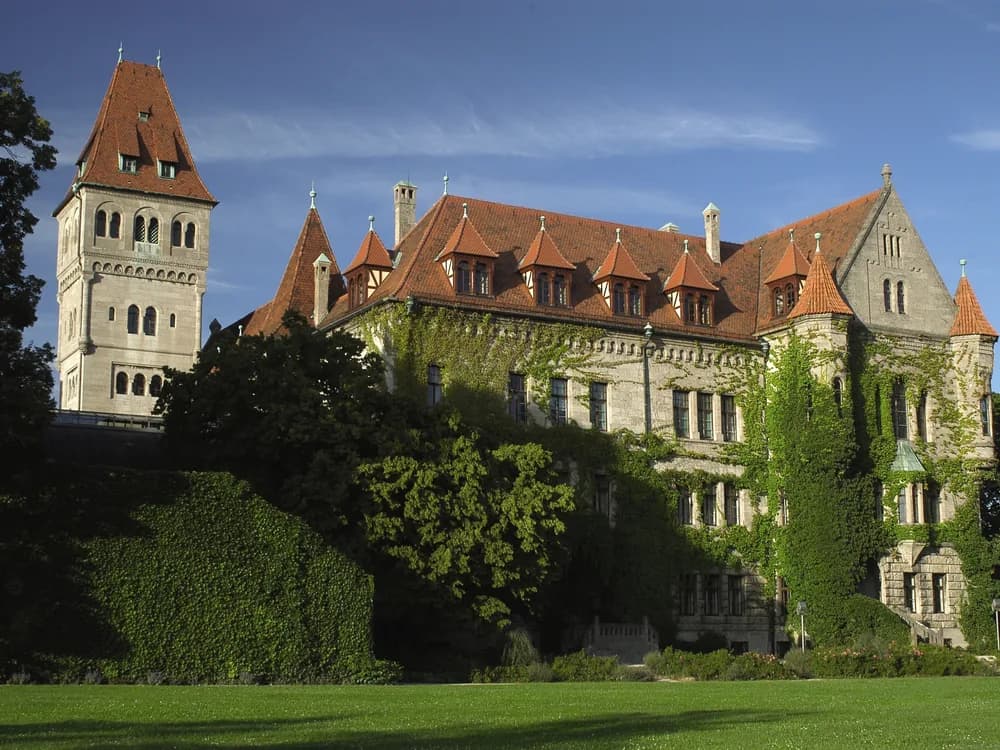
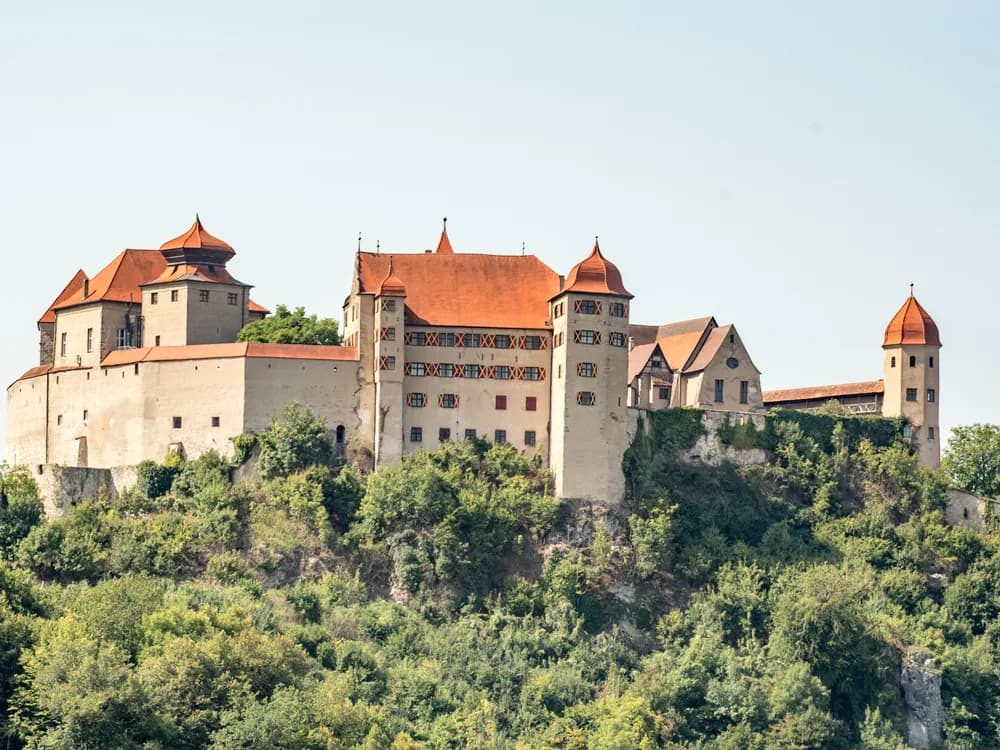
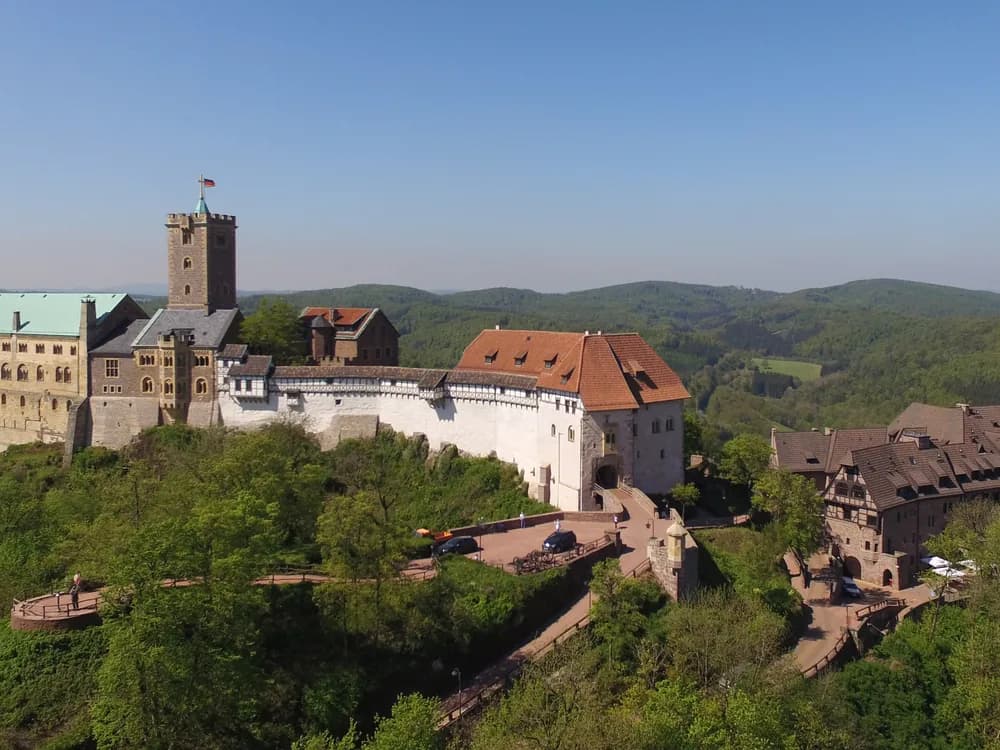
Featured Tour
Pommersfelden: Weissenstein Castle Guided Tour
Cancellation available · Instant confirmation
Tours & Tickets
Powered by GetYourGuide
Entry from
€18/ adult