
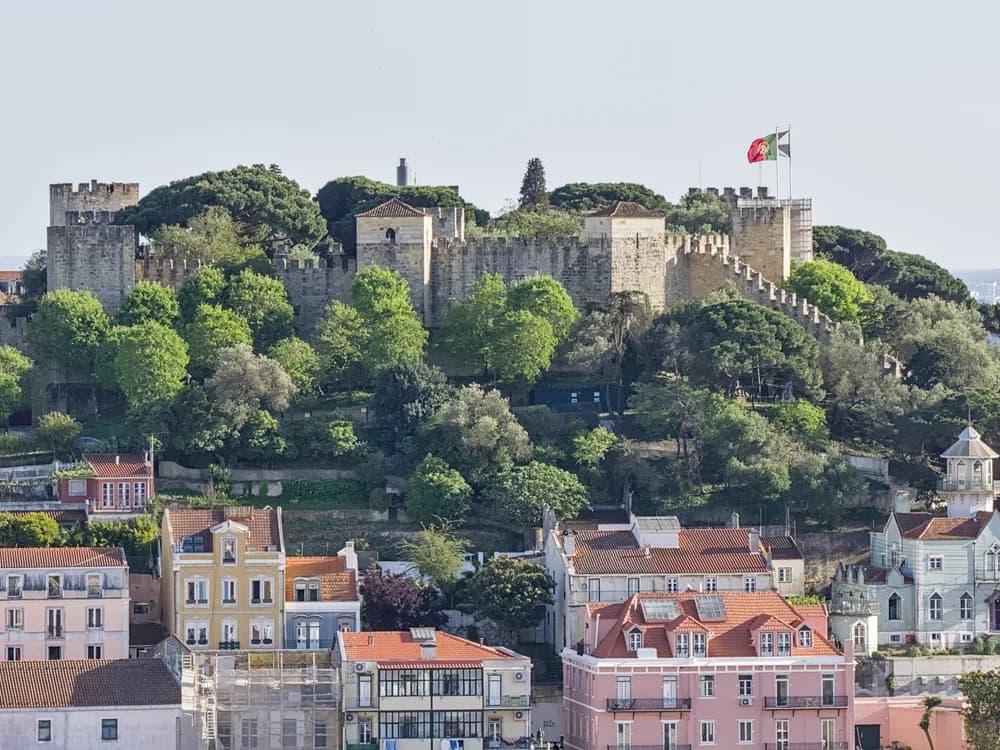
© Unsplash
Castelo de São Jorge
Castelo de São Jorge
Portugal · Lisbon · Near Lisbon
Built 1147 · Medieval, Moorish-influenced
Quick Facts
- Hours
- March–October: daily 09:00–21:00. November–February: daily 09:00–18:00. Last entry 30 minutes before closing. Closed 1 January, 1 May and 25 December.
- Entry via GYG
- €18
- Duration
- 1.5–2 hours
- Best time
- Year-round; spring and autumn for ideal temperatures; avoid peak midday hours in July–August; book ahead online to skip the morning queue
- Nearest city
- Lisbon
Highlights
- ✦The ramparts and city panorama — the castle's battlements give the most commanding view over Lisbon, the Tagus estuary, the Alfama rooftops and, on clear days, the Arrábida hills and the Atlantic beyond
- ✦A genuine archaeological site beneath the surface, revealing continuous occupation since at least the 7th century BC across Iron Age, Phoenician, Roman, Visigothic and Moorish layers, with 10th-century Islamic cisterns and house outlines surviving in situ
- ✦The Siege of Lisbon of 1147, when Afonso Henriques, first King of Portugal, captured the castle from the Moors after a 17-week siege aided by Crusaders bound for the Holy Land — recorded in the eyewitness account De Expugnatione Lyxbonensi
- ✦A free-roaming colony of peacocks that wanders the towers, ramparts and gardens among fig trees and pomegranate shrubs, turning a military monument into an unexpectedly living garden
- ✦The Torre de Ulisses periscope — a camera obscura installation in the castle's highest tower projecting a live 360° image of Lisbon's streets and river onto a white bowl in a darkened chamber below
Skip the queue with a guided tour
Skip-the-line tickets & expert guides
Castelo de São Jorge is not primarily a museum, a palace, or a spectacular set-piece monument. It is a working hilltop — the highest ground in Lisbon, 110 metres above the Tagus, occupied continuously since the Iron Age. The walls are Moorish in origin, Portuguese in modification, romantic in subsequent imagination. The ramparts are wide enough to walk, the towers can be climbed, the peacocks are real, the archaeological site is genuinely important, and the panorama is irreplaceable — but the best way to understand São Jorge is to understand that this hill is why Lisbon is where it is. The Tagus crossing, the defensible height, the sight lines in every direction: everything the city became follows from this geography.
Lisbon under Moorish rule — the city of Lixbuna, then al-Ushbuna — was a significant Atlantic port of the Umayyad and later Taifa kingdoms, and the castle on the hill was the seat of the Moorish governor, with the lower city spreading down the slopes toward the river. The occupation lasted from 714 to 1147, over four centuries, and left permanent marks on the city's layout, language and culture. Alfama, the historic neighbourhood directly below the castle, takes its name from the Arabic al-hamma, meaning springs or baths, and its street pattern preserves the Moorish organic urban form, unchanged even by the 1755 earthquake that destroyed most of the rest of Lisbon. To walk from the castle down through the Alfama is to walk through the most direct physical survival of Islamic Lisbon.
After the Reconquista, Afonso Henriques converted the castle into a royal palace, and it served as the official residence of the Portuguese royal family for nearly four centuries — João I and Philippa of Lancaster were married here, and Manuel I held court here before moving to the Ribeira Palace nearer the river in the early 16th century. The Lisbon earthquake of 1 November 1755, one of the most destructive natural disasters in European history, killing between 30,000 and 50,000 people and levelling 85% of the city, severely damaged the castle, which was subsequently used as a barracks and gradually fell into disrepair. The Romantic rediscovery of the castle in the 19th century, and the Estado Novo's restoration programme of the 1930s and 1940s, gave it its current form, while archaeological excavations beginning in 1996 transformed our understanding of pre-Portuguese Lisbon and continue today.
A focused visit takes around 1.5 hours: 30 minutes for the ramparts and tower views, 20 minutes for the archaeological site, 15 minutes for the inner courtyard and the periscope tower, and the rest for wandering among the peacocks. Buy tickets online in advance, since the morning queue can be significant from April to October, and consider the guided tour for expert interpretation of the Moorish and medieval layers. The Alfama neighbourhood directly below is worth two hours of its own — the medieval street pattern, tiled facades, miradouros and Fado houses are all within walking distance downhill, making São Jorge a natural first stop in Lisbon before descending to the riverfront.
History
The hill's occupation reaches back to an Iron Age settlement and a Phoenician trading post, followed by Roman occupation as part of Olisipo, founded in 205 BC, then a Visigothic period, before the Moorish conquest of 714, when an Islamic citadel was built and the hill became the seat of the Moorish wali, or governor, of al-Ushbuna. Four centuries of Islamic cultural influence followed, including the preservation of the Alfama's distinctive street pattern that survives intact today.
On 25 October 1147, Afonso Henriques, extending the young Kingdom of Portugal southward, captured the castle from the Moors with the help of Crusaders — primarily English, Flemish and German — who had been diverted from the Second Crusade. The siege, recorded in the eyewitness account De Expugnatione Lyxbonensi (On the Conquest of Lisbon), lasted 17 weeks before the city fell. Lisbon was designated Portugal's capital in 1255, and the castle developed into a royal palace through the 13th to 15th centuries, hosting marriages, coronations and courts, including the marriage of João I and Philippa of Lancaster in 1387.
Manuel I moved the royal court to the Ribeira Palace nearer the river around 1511, beginning the castle's gradual conversion from royal residence to barracks. The 1755 earthquake destroyed much of the surviving medieval palace fabric, and the Estado Novo undertook a major restoration in the 1930s and 1940s under the General Directorate of National Monuments (DGEMN). Systematic archaeological excavations beginning in 1996 revealed the Iron Age through Moorish layers beneath the castle, a programme that continues today. The castle is now a Monumento Nacional and one of Portugal's most visited historic sites.
How to Visit
Getting there: The castle sits atop the Alfama, Lisbon's oldest district. The easiest ascent is via Tram 28 from Largo Martim Moniz or Largo Chiado, getting off at Largo Portas do Sol, or Bus 737 from Praça da Figueira to the castle gate. From central Lisbon (Rossio, Baixa), allow 20 minutes on foot uphill through the Alfama alleys — the neighbourhood is worth exploring on the way up. Taxis and rideshares drop off at the main gate.
Tickets and booking: Adult entry is €15, with children under 10 free. A skip-the-line ticket avoids the queue, essential in July and August, and a guided tour adds expert interpretation of the Moorish and medieval layers — recommended for first-time visitors. Book at least 3 days ahead in peak season.
What to prioritise and combine: The rampart walk and the Torre de Ulisses periscope are the essential experiences. The archaeological site adds 20 minutes and is worthwhile. Descend via the Alfama alleys rather than retracing your steps — the Miradouro de Santa Luzia and Miradouro das Portas do Sol are both below the castle and offer further views. The Fado Museum (Museu do Fado) is in the Alfama and pairs well with a morning at the castle. Allow a full morning for the castle plus the Alfama.
Frequently Asked Questions
The hill has been occupied since at least the 7th century BC, with successive Iron Age, Phoenician, Roman and Visigothic layers beneath the surface before the Moorish conquest of 714 established an Islamic citadel and made the hill the seat of the city's governor. Archaeological excavations beginning in 1996 have revealed these layers, including 10th-century Islamic cisterns and house outlines, in an interpretive walkway open to visitors.
Location
R. de Santa Cruz do Castelo, 1100-129 Lisboa, Portugal
Nearby Castles
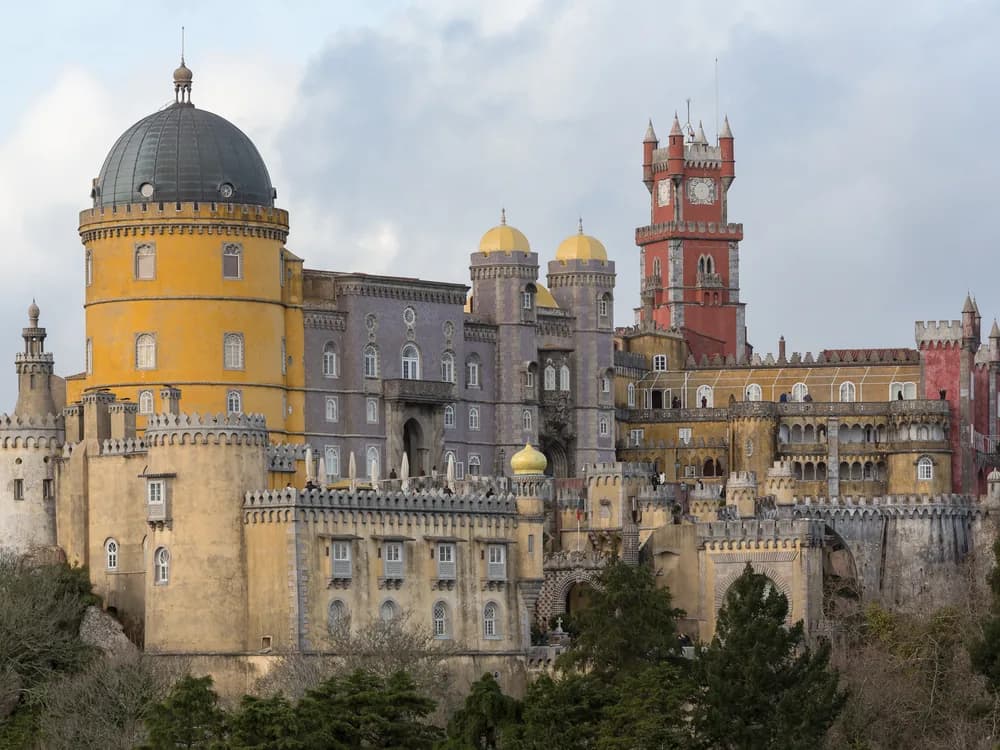
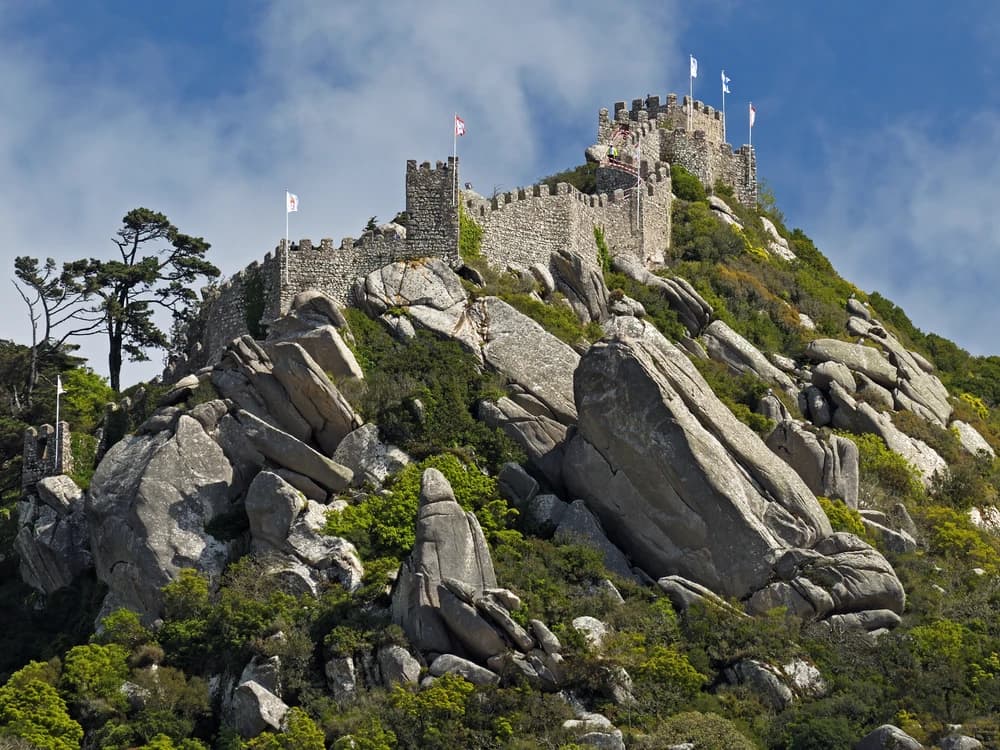
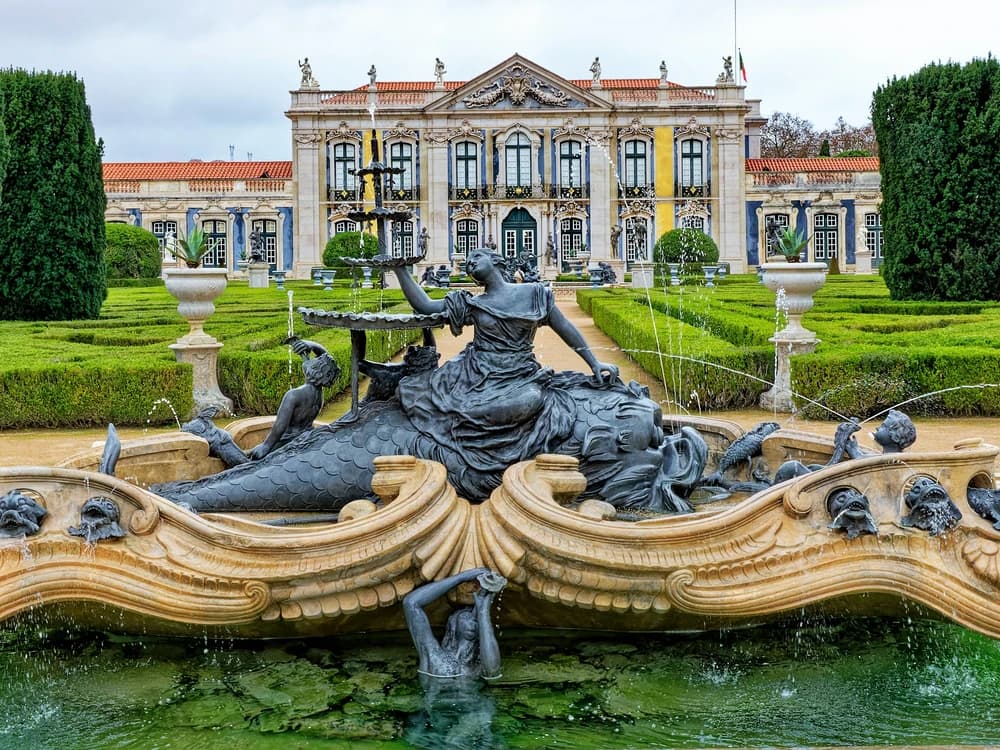
Featured Tour
Lisbon: São Jorge Castle Skip-the-Line Entry Ticket
Cancellation available · Instant confirmation
Tours & Tickets
Powered by GetYourGuide
Entry from
€15/ adult