
Scotland · Updated May 2026
The Best Castles in Scotland: From Edinburgh to the Highlands
Scotland has more castles per square mile than almost any country in Europe — some 3,000 castles, keeps, towers and fortified houses scattered across its 78,000 square kilometres. From the volcanic rock of Edinburgh to the sea-lochs of the Western Highlands, Scotland's castle landscape is the product of a thousand years of clan warfare, royal intrigue, Jacobite rebellion and the particular Scottish genius for choosing dramatic positions for defensive architecture.
Four castles define the Scottish experience. Two are cities in stone, symbols of national identity on their volcanic summits. One is the most photographed building in Scotland, its island setting in a Highland loch so perfect it looks invented. One is a medieval survival famous in the 21st century because of its role in two of the most successful screen franchises in history.
1. Edinburgh Castle — The Heart of Scottish History
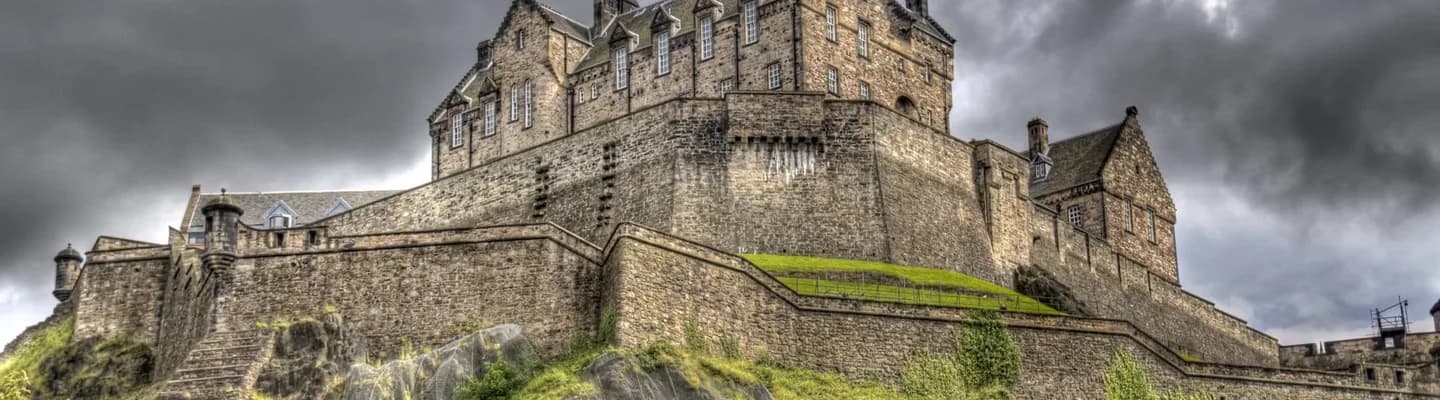
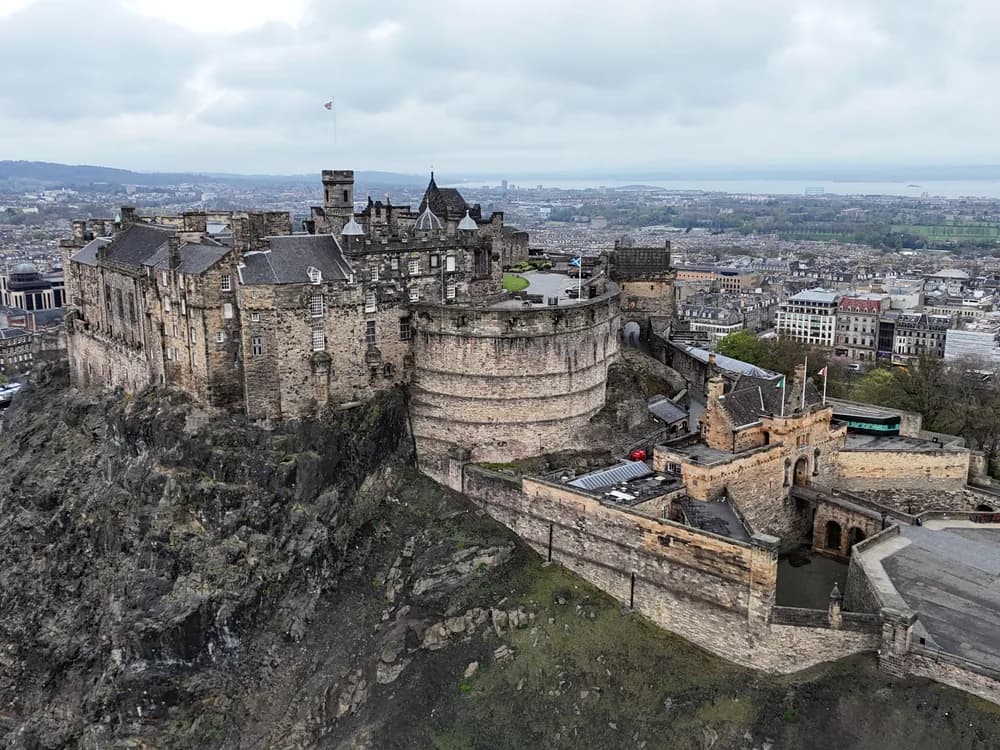
Edinburgh Castle is Scotland. It is not merely a castle but the most complete expression of Scottish national identity concentrated on a single site — a volcanic plug of basalt 130 metres above the city it has dominated for over a thousand years, the seat of Scottish monarchs, the treasury of Scotland's crown jewels, and the place where the nation's most important battles and most painful betrayals played out.
The Scottish Crown Jewels — the Stone of Destiny, the Crown of Scotland (the oldest surviving crown jewels in Britain), the Sword of State and the Sceptre — are housed here and are, without exaggeration, among the most historically significant objects in northern Europe. The Honours of Scotland survived the English Civil War, three centuries of English occupation of the castle, and Cromwell's attempt to melt them down by being hidden inside a church wall in Kinneff. They weren't officially presented to George IV until 1822.
The castle also contains Mons Meg, a 15th-century bombard so large it could fire a 150kg stone cannonball nearly two miles. The vaults beneath the castle held French and American prisoners during the Seven Years' War and American War of Independence; their graffiti is still visible on the stone walls.
The One O'Clock Gun fires Monday through Saturday — a tradition since 1861, originally to allow ships in the Firth of Forth to set their chronometers. It remains one of Edinburgh's most distinctive sounds.
Essential info: Book online at least a week ahead in summer — daily visitor numbers are capped. The castle is a 15-minute walk up the Royal Mile from Waverley Station. Allow 2.5-3 hours minimum. The best views of the castle are from Princes Street Gardens.
2. Eilean Donan Castle — Scotland's Most Photographed Castle
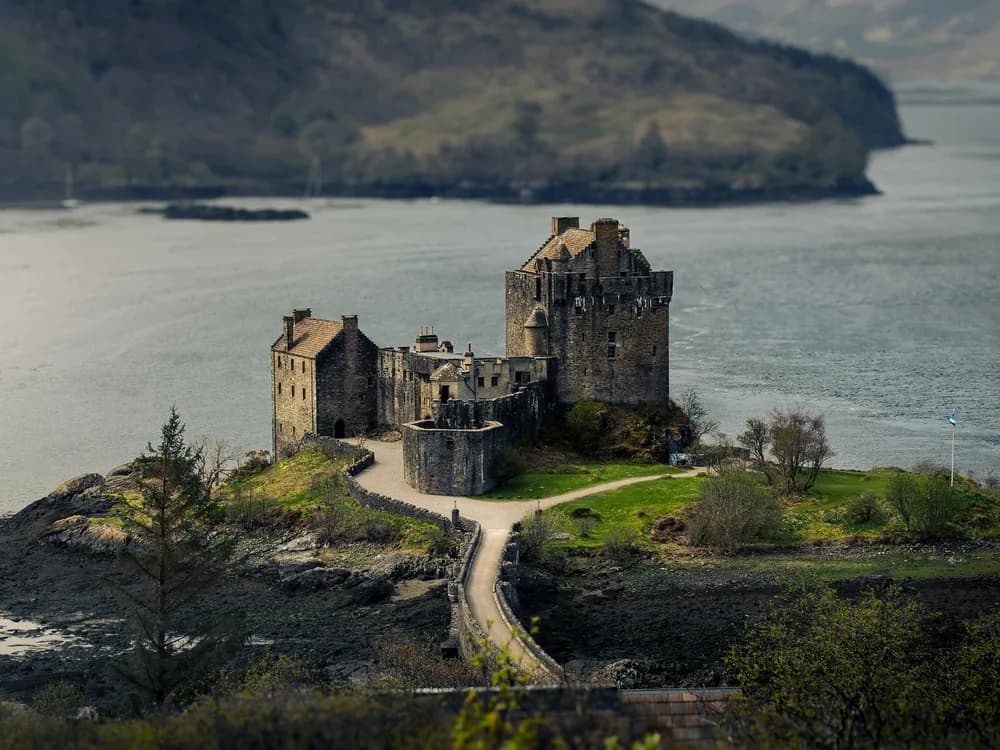
Eilean Donan exists on the far end of a causeway where three sea-lochs meet — Loch Duich, Loch Long and Loch Alsh — in the Western Highlands. The combination of elements is almost unfair: a compact 13th-century fortress on a tidal island, its reflection broken by the dark water of the loch, with the Five Sisters of Kintail rising behind and, on the clearest days, the Cuillin Ridge of Skye visible in the distance.
It was blown up by government forces in 1719 following a Jacobite rising that briefly installed a small Spanish garrison, and lay in ruins for nearly 200 years. The MacRae clan purchased and meticulously reconstructed it between 1912 and 1932. The reconstruction is so complete that the castle looks ancient in photographs — which is why it has appeared in dozens of films and television series including Highlander (1986), one of the most iconic opening sequences in fantasy cinema.
The interior is remarkably intimate for a castle of its visual stature — beautifully furnished Edwardian rooms in the restored living quarters, a vaulted banqueting hall, and a particularly moving display of Jacobite memorabilia. The castle is privately owned by the Conchra Charitable Trust and staffed partly by MacRae clan volunteers.
Essential info: No public transport to the castle — hire a car from Inverness (75 min), Glasgow (3h), or Edinburgh (3.5h). The village of Dornie beside the castle has a small hotel and a good pub. Arrive at opening (10am) for the best photographs before coach tours arrive; the late afternoon light from the south is exceptional.
3. Stirling Castle — Scotland's Most Important Castle
If Edinburgh Castle is Scotland's symbol, Stirling Castle is its pivot — the castle that determined who controlled Scotland, because Stirling controlled the lowest crossing of the River Forth and with it the route between the Highlands and the Lowlands. Whoever held Stirling held Scotland. It was here that William Wallace defeated the English at the Battle of Stirling Bridge in 1297. It was at Bannockburn, two miles south, that Robert the Bruce secured Scottish independence in 1314. Mary Queen of Scots was crowned here as an infant in 1543.
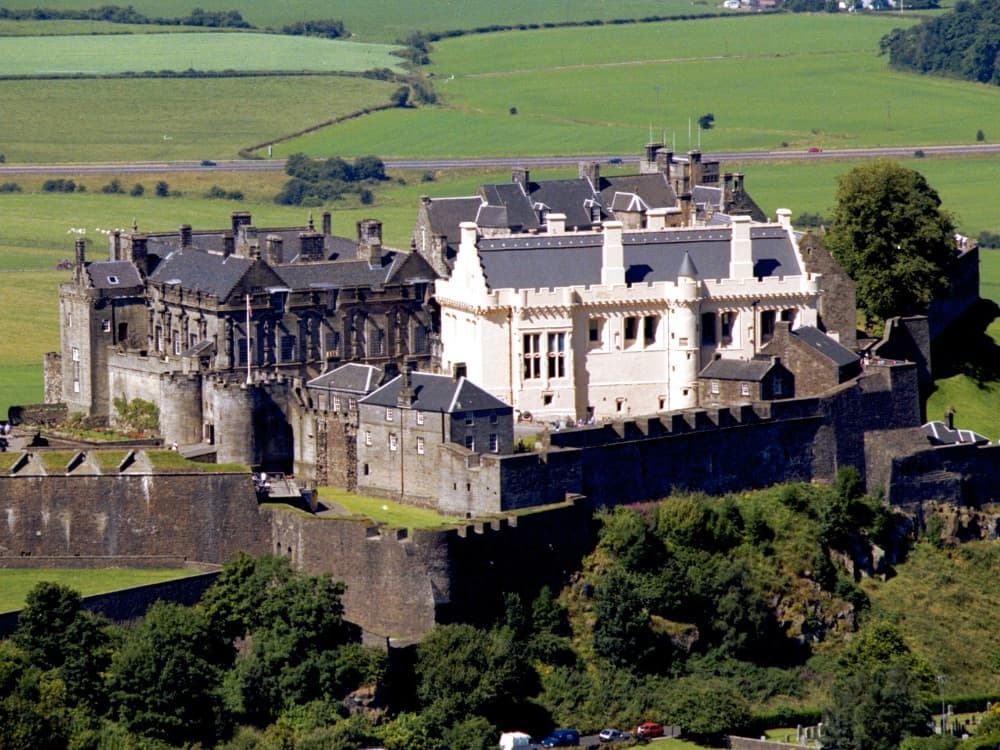
The castle itself is a Renaissance masterpiece. James IV and James V transformed the medieval fortress into a Renaissance palace in the early 16th century, and the Royal Palace — with its extraordinary carved stone figures of gods, nobles and fools on its exterior walls — is one of the finest Renaissance buildings in Britain. The Stirling Heads, 38 carved oak medallions depicting royalty and mythological figures, were recently restored and are now displayed in the Palace's Queen's Inner Hall.
The Great Hall (1503) is the largest medieval banqueting hall in Scotland; the Chapel Royal (1594, rebuilt for the baptism of the future James VI and I) is the most important Jacobean building in Scotland. Both have been meticulously restored to their original appearance.
Essential info: Regular trains from Edinburgh (50 min) and Glasgow (45 min). The Old Town and Church of the Holy Rude are worth an hour before or after the castle. Combine with the Wallace Monument (2km east, a Victorian tower with immense views) for a full day.
4. Doune Castle — The Most Screen-Famous Medieval Castle in Britain
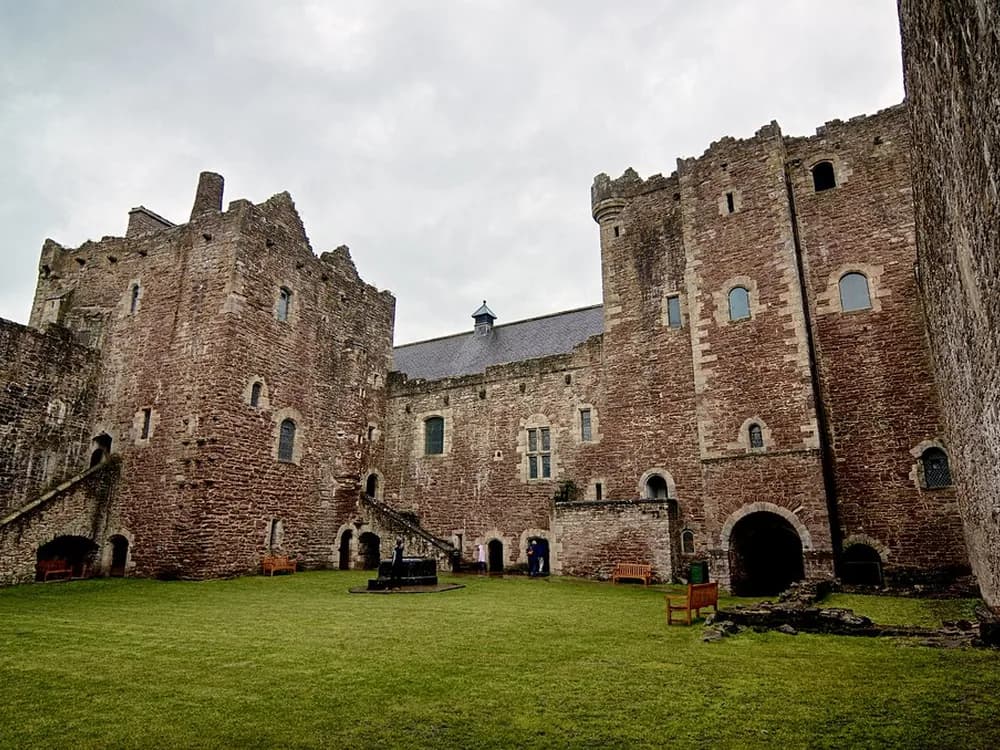
Doune is a surprise. Seen from the approach road, the 14th-century curtain walls and great tower are impressively well preserved but unremarkable by Scottish standards. Step through the gate and the picture changes: the courtyard is one of the most intact medieval castle interiors in Britain, the keep-gatehouse among the best preserved of its type in Europe, and the views from the walls over the River Teith and the Perthshire landscape are genuinely lovely.
Doune's modern fame rests on two productions filmed here. Monty Python and the Holy Grail (1974) used it as the primary location for multiple scenes — most notably the French Taunting scene, the Swallow debate, and various other classic sequences. Game of Thrones (2011) filmed the Winterfell exterior scenes here in the first season before larger sets were built. Terry Jones, who co-directed Holy Grail, described it as the most complete medieval castle he had ever found.
The audio guide is narrated by Terry Jones and includes recordings of original cast members from Holy Grail, which makes Doune's audio guide the funniest in the Historic Environment Scotland portfolio by a very wide margin.
Essential info: 40-minute drive from Stirling (or a 20-minute bus/taxi). Combine naturally with Stirling as a half-day addition. The village of Doune has an excellent pub. Admission is modest (under £10) — good value for the quality of the site.
Planning a Scottish Castle Trip
- ✦Edinburgh as base: All major central belt castles — Edinburgh, Stirling, Doune — are reachable by public transport from Edinburgh. A 3-night stay covers all three comfortably.
- ✦Highland road trip: The classic route Inverness → Eilean Donan → Isle of Skye is one of Britain's great drives. Combine with Urquhart Castle on Loch Ness (40 min from Inverness) to add a fourth dramatic castle.
- ✦Best season: July and August are peak but weather-dependent — Scotland in summer can be spectacular or relentlessly grey. Late May and September often deliver the best combination of reasonable weather and reduced crowds. October for autumn colour around Eilean Donan is superb.
- ✦Midges: Between May and September, Highland Scotland has midges (tiny biting insects) that make outdoor photography unpleasant around dawn and dusk. Bring repellent for Eilean Donan and any Highland locations.
Castles in this Guide
scotland · Central Scotland
Edinburgh Castle
Scotland's most iconic fortress, perched on an ancient volcano above the Old Town
scotland · Scottish Highlands
Eilean Donan Castle
Scotland's most photographed castle — three lochs, one island, one arched bridge
scotland · Central Scotland
Stirling Castle
Where Scottish kings were crowned and history pivoted — the key to Scotland
scotland · Central Scotland
Doune Castle
Monty Python's castle, Game of Thrones' Winterfell — medieval Scotland's most filmed fortress